

Animal Feed Pellet Machine for Farms & Feed Mills
The equipment covers various capacity needs, meeting the requirements for continuous, large-volume animal feed production applications.
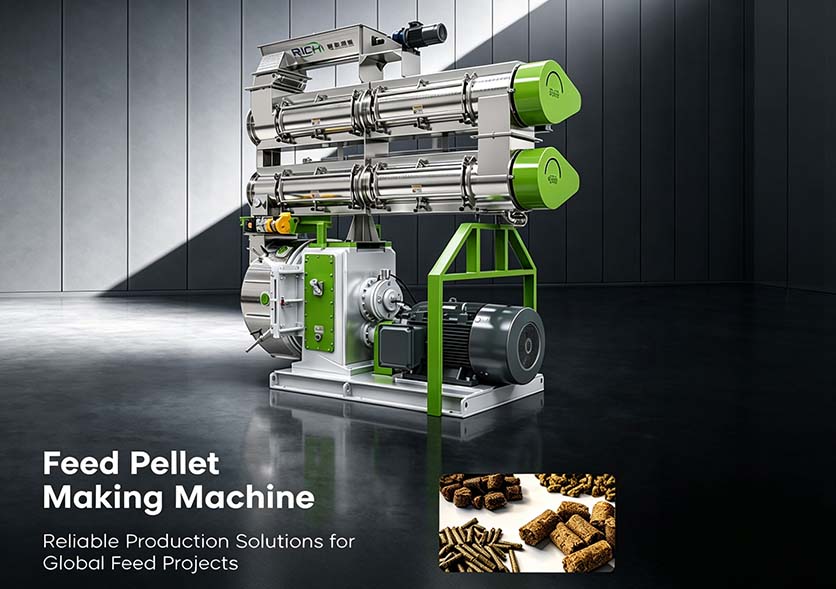
Animal Feed Pellet Machine: Core Granulation Equipment for Commercial Feed Production
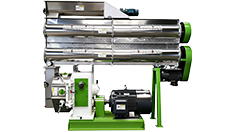
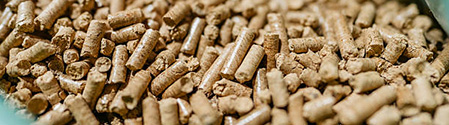
RICHI feed pelletizer offers an output range of 1-40+T/H and is a core processing machine in animal feed production. Through the compression between the rollers and ring die, it processes mixed powder materials into pellets with a certain density and size, improving feed storage, transportation, and automatic feeding performance.
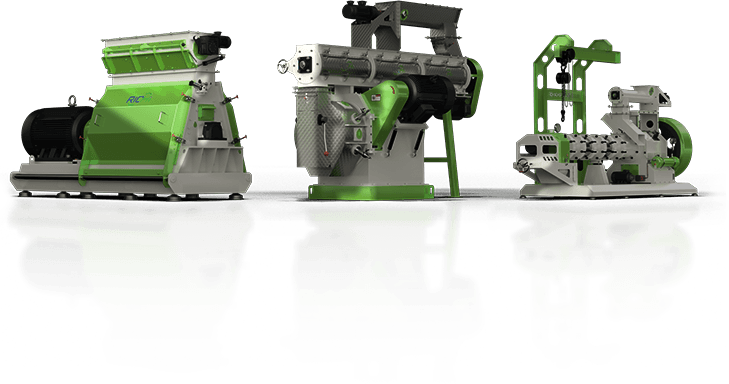
As a vital component of the pellet feed production line, this ring die pellet mill can be configured according to project capacity needs. It works in tandem with crushing, mixing, cooling, screening, and packaging equipment to achieve continuous feed processing.
Why Choose Industrial-Grade Feed Pellet Equipment?
Feed Pellet Mill Structure & Engineering Design
The performance of a feed pellet machine is closely related to the design of its core structure. From power transmission to pelleting components, every key part affects the equipment’s operating condition and the pellet production results. RICHI creates reliable pelleting equipment suitable for commercial feed production through rational structural design and component configuration.
Ring Die & Pelleting Chamber
Feeding & Conditioning System
Drive & Transmission System
Structural Frame & Safety Design
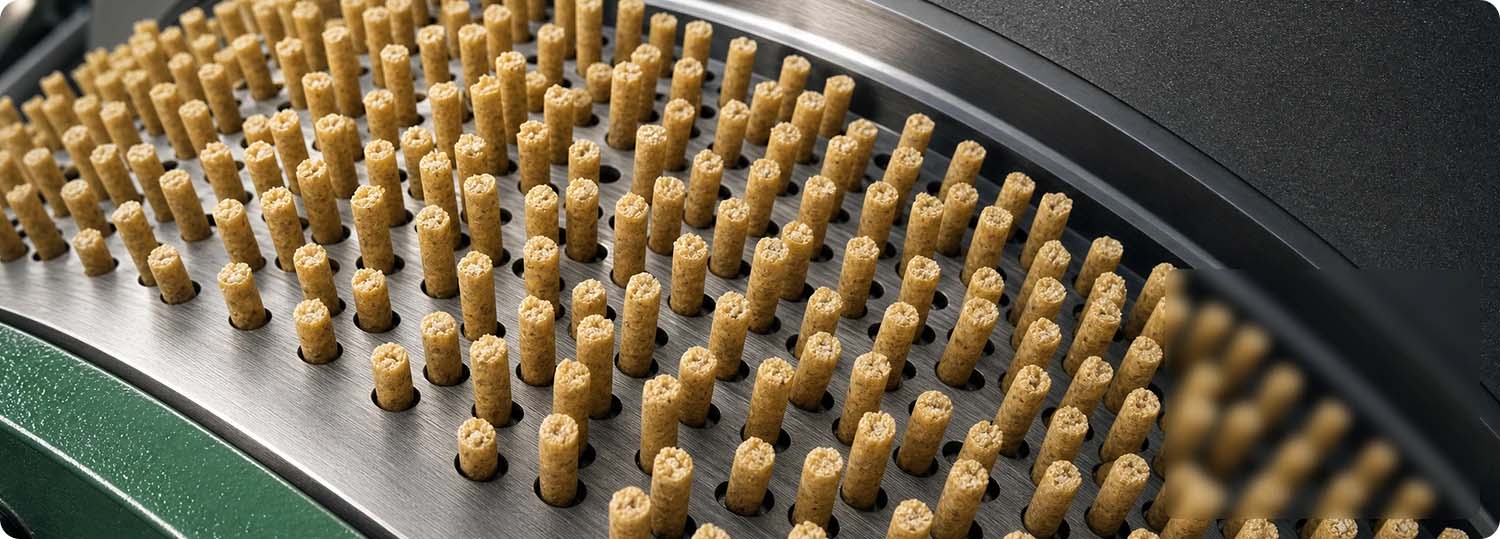
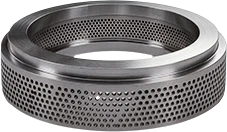
Ring Die & Pelleting Chamber
The ring die compression ratio is customized to match your feed formula. The die holes are CNC-machined for high precision, ensuring uniform pellets with a low fines rate.
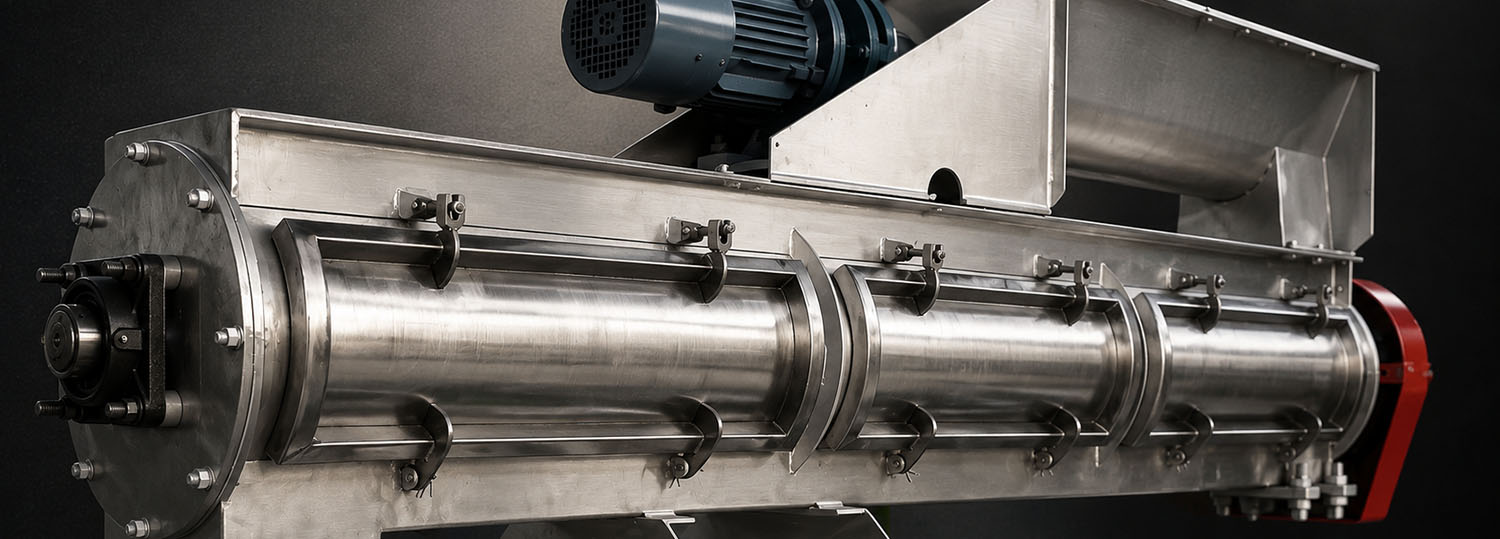
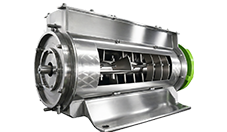
Feeding & Conditioning System
Equipped with a variable-frequency forced feeder, it ensures continuous and even material flow into the stainless steel conditioner. This prevents blockages and cross-contamination caused by material residue.
Drive & Transmission System
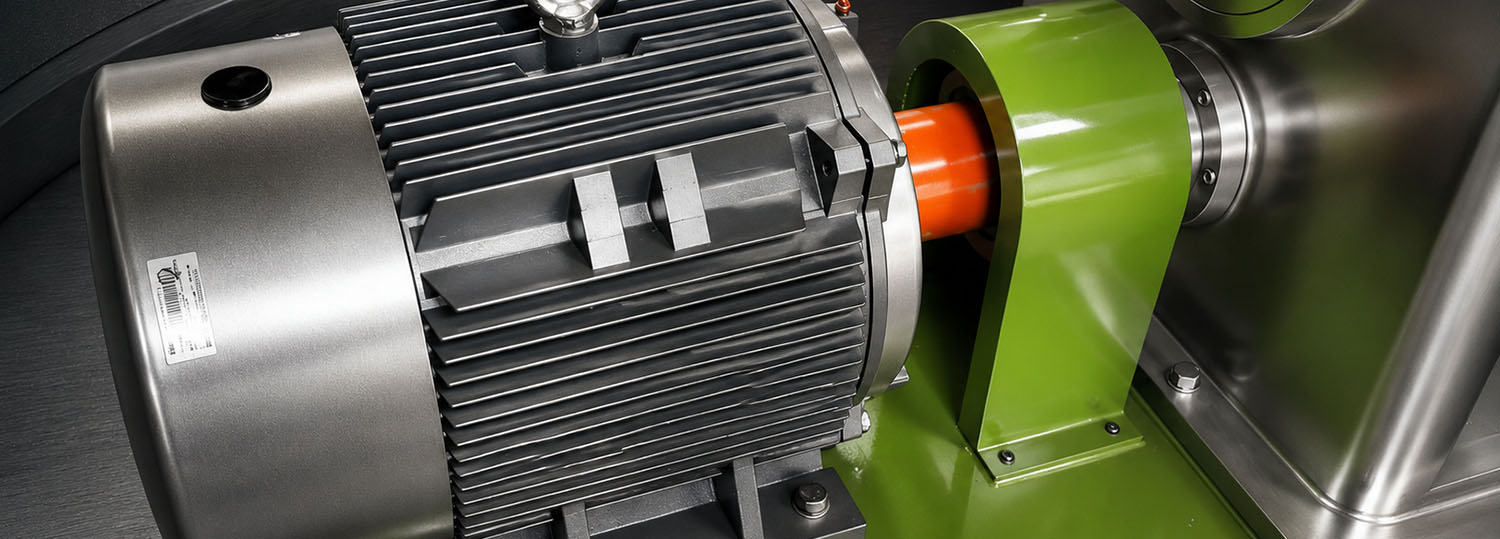
Features a high-precision gearbox transmission. It delivers high torque efficiency without slipping, eliminates belt wear issues, and guarantees superior long-term stability.
Structural Frame & Safety Design
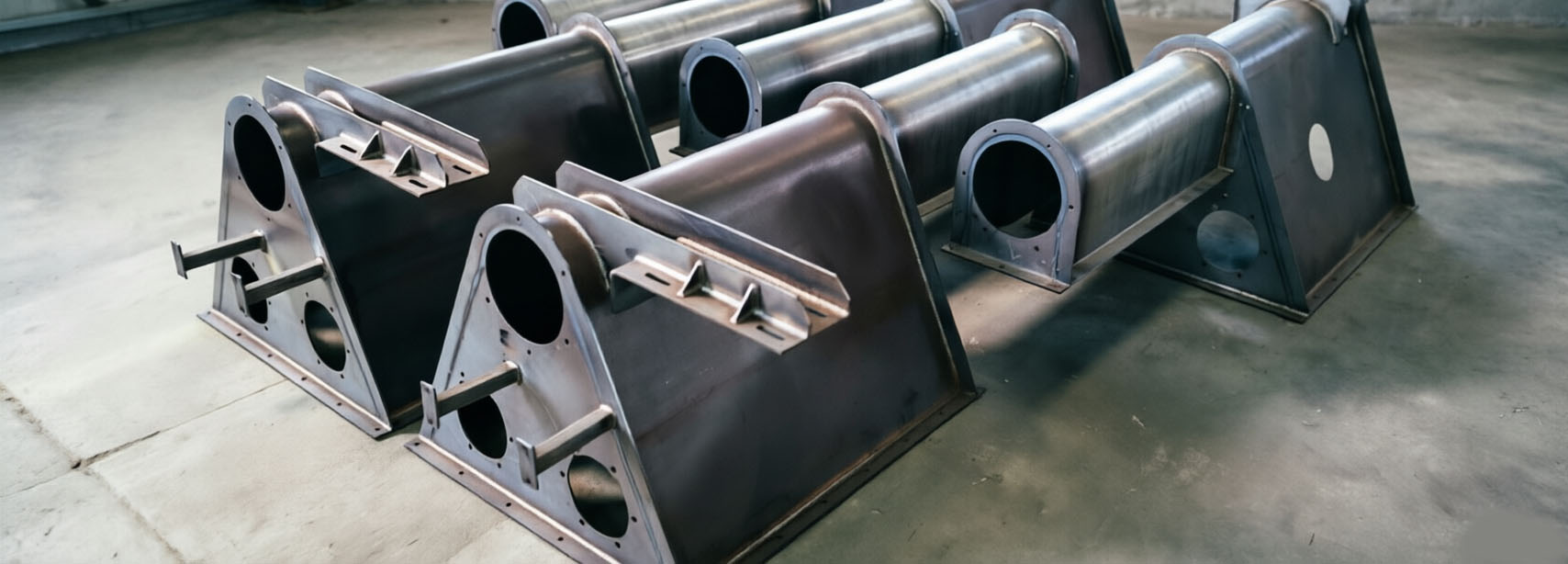
Built on a high-strength steel chassis with integrated welding, the rigid structure ensures stable operation even under high-vibration conditions.
Feed Pellet Machine Specifications & Applications
The following parameters are the rated output for a complete feed production line. Actual capacity depends on raw material prep and batching stability. Allow for a margin based on material traits and process conditions during selection.
Selection requires multi-dimensional consideration: capacity dictates power and die specs; material traits affect compression ratio and conditioning; pellet specs determine die aperture and cutter adjustment.
Animal Feed Pellet Machine
| Model | SZLH250 | SZLH320 | SZLH350 | SZLH420 | SZLH508 | SZLH558 | SZLH678 | SZLH768 |
| Main Motor Power (kw) | 22 | 37 | 55 | 110 | 160 | 185 | 250 | 315 |
| Feeder Power (kw) | 1.1 | 1.5 | 1.5 | 1.5 | 1.5 | 1.5 | 1.5 | 2.2 |
| Modulator Power (kw) | 1.5 | 4 | 4 | 7.5 | 7.5 | 11 | 11 | 11 |
| Ring Die Inner Diameter (mm) | 250 | 320 | 350 | 420 | 508 | 558 | 673 | 762 |
| Finished Pellet Diameter (mm) | 2~12 | |||||||
| Output (t/h) | 1.0-1.5 | 3-4 | 5-6 | 10-12 | 15-16 | 20-22 | 30-33 | 38-40 |
| Note:Specs subject to final quotation. RICHI offers professional custom design and production. Final interpretation rights belong to RICHI. | ||||||||
Application Scope of Feed Pelletizer
| Application | Feed Types |
| Poultry Feed | Broiler feed, layer feed, duck feed, goose feed and other poultry feed pellets |
| Pig Feed | Piglet feed, growing-finishing pig feed, sow feed and other pig feed pellets |
| Cattle & Sheep Feed | Alfalfa pellets, grass pellets, concentrated feed pellets and other ruminant feed |
| Special Animal Feed | Rabbit, deer and other specialty animal feed pellets |
| Multi-Product Feed Production | Various animal feed pellets with different formulas |
Working Principle of Animal Feed Pellet Making Machine
From powdery feed to regular pellets, the process involves continuous processing steps such as material conditioning, forming, and cutting. The entire production process centers on adjusting the material state and controlling pellet specifications, enabling the equipment to process loose feed into pellet products that are convenient for storage, transportation, and use.
1.
Mixed Material Enters the Pelleting Chamber
Crushed and mixed feed raw materials enter the pelleting system. According to different animal feed formulas, the raw materials can include corn, soybean meal, wheat, bran, grass powder, and other components. The mixed material, after conditioning, enters the pelleting chamber to start the pellet forming process.
2.
Roller Extrudes Material Through the Ring Die
Inside the pelleting chamber, the roller presses the mixed feed into the holes of the ring die. After extrusion, the material forms continuous cylindrical pellets. By replacing ring dies of different specifications, the equipment can produce pellet feed of different diameters, such as chicken feed, pig feed, and cattle/sheep feed.
3.
Cutter Adjusts Pellet Length
When the feed is extruded from the ring die, the cutter cuts the extruded pellets to form a required pellet length. According to the requirements of the feed product, the pellet length can be adjusted to produce animal feed pellets of different specifications.
4.
Pellet Forming is Completed and Enters Subsequent Use
The pelleted feed is discharged from the equipment outlet after pelleting. For on-farm feed production, it can directly enter the subsequent use process; for commercial feed production, equipment such as cooling, screening, and packaging can be configured as needed.

Animal Feed Mill Machine Solutions for Different Production Scales
Feed production demands are not fixed. As farming scale expands, feed demand increases, or business models change, production equipment also needs to have corresponding room for adjustment.
From standalone configurations that meet daily feed supply, to commercial processing solutions supporting continuous production, RICHI provides animal feed pelleting equipment with different capacity levels. It helps customers choose the proper configuration based on current production needs, and reserves space for future expansion.
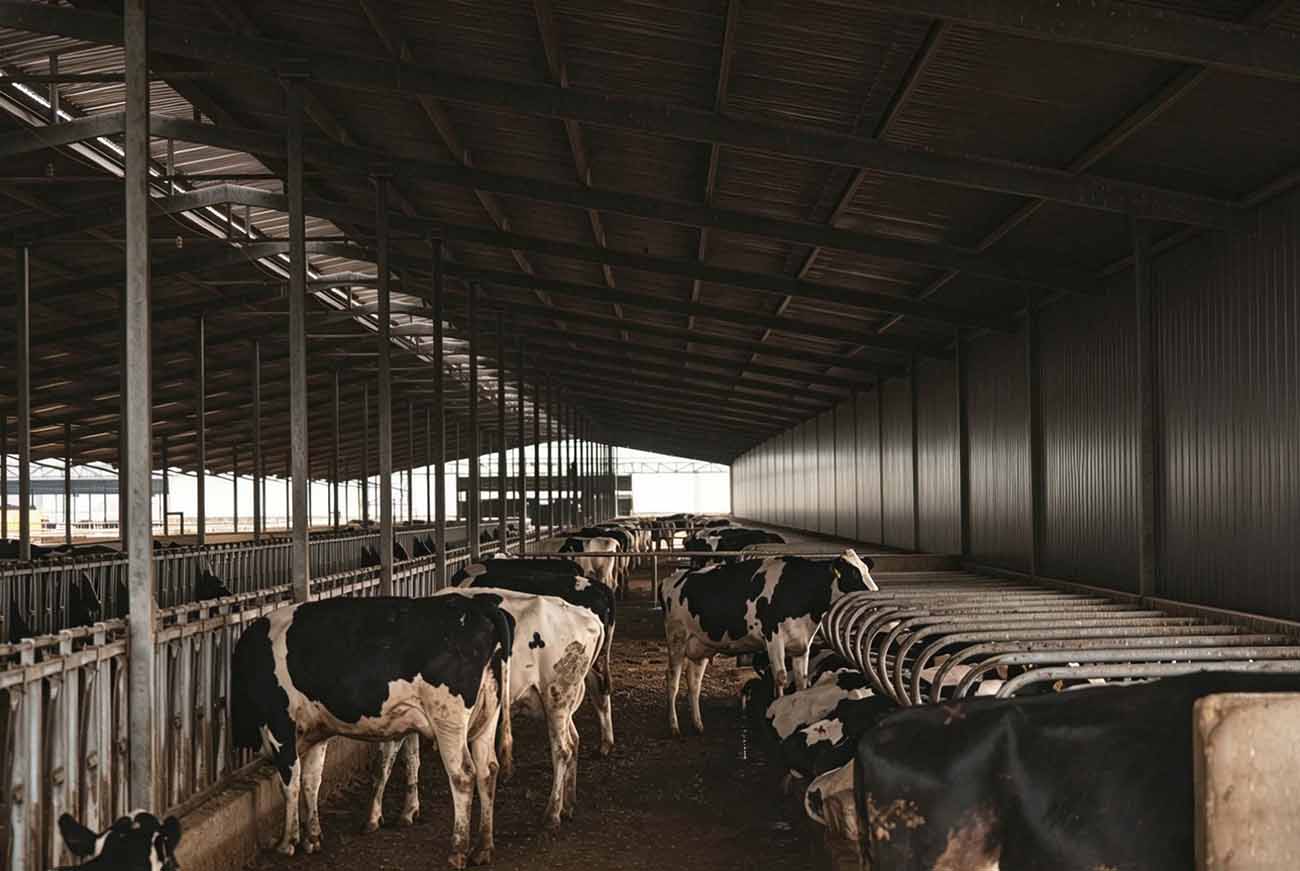
1. Farm Feed Production Solution (≥8 t/day)
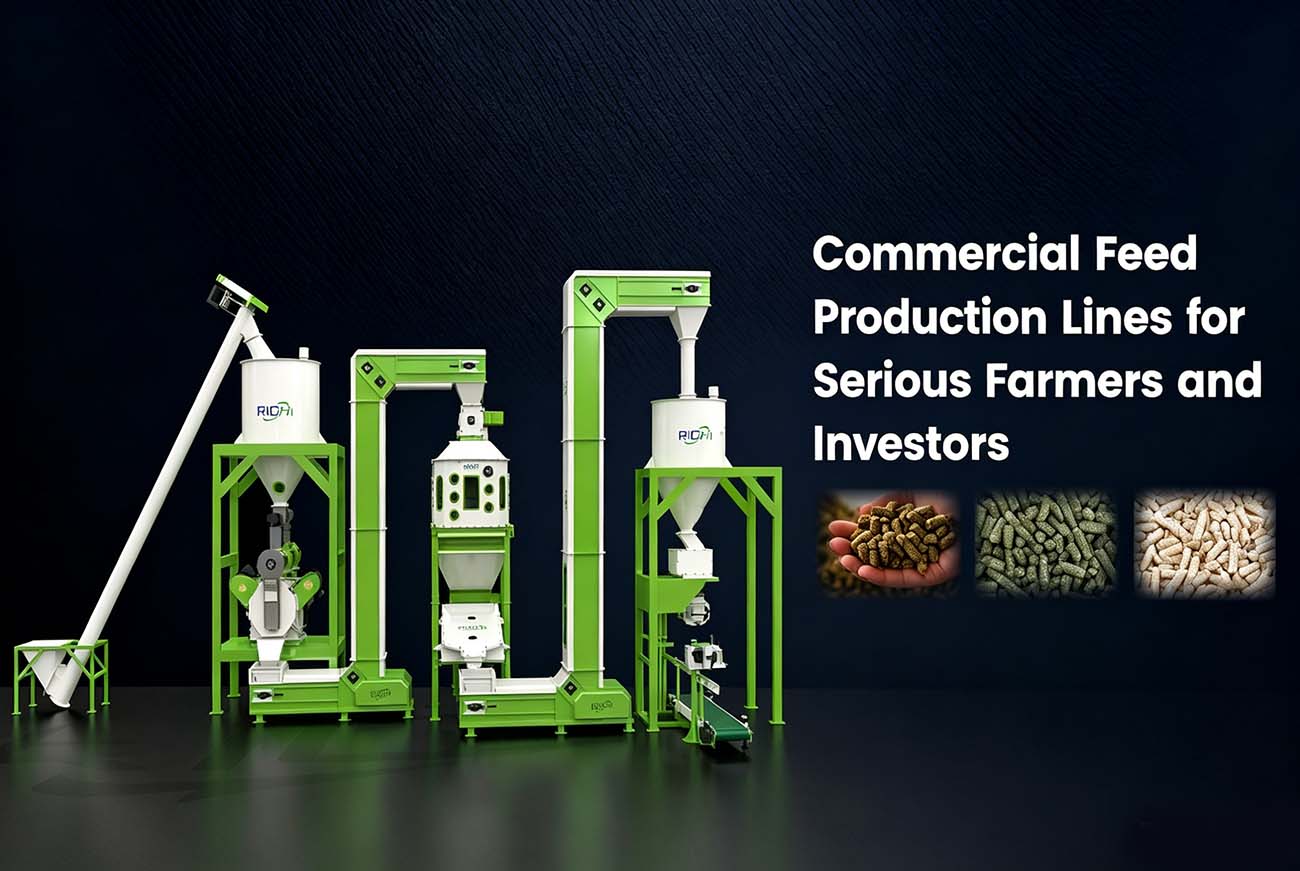
2. Commercial Feed Production Solution
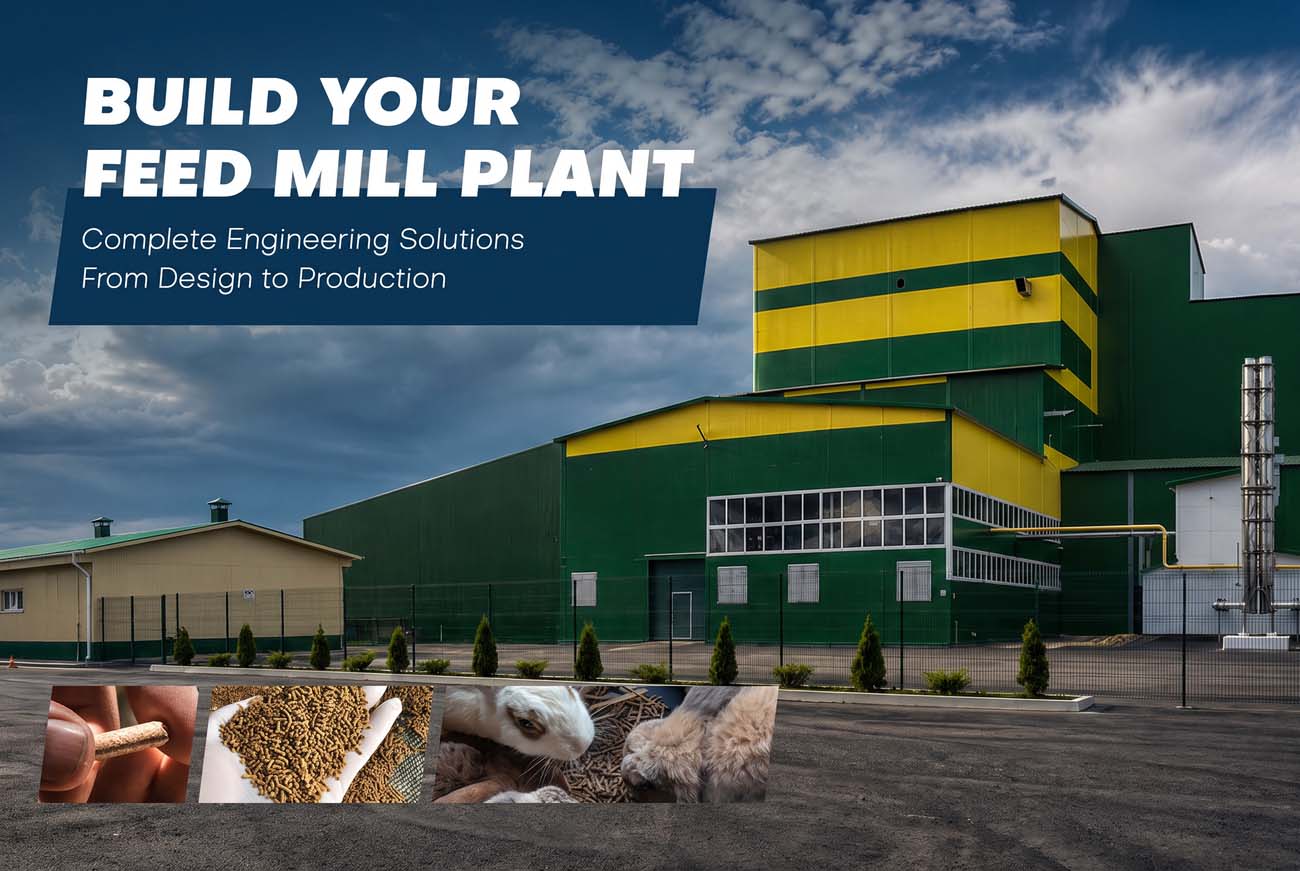
3. Industrial Feed Manufacturing Solution
1. Farm Feed Production Solution
Production Requirements:
Daily Feed Requirement Reference:
- ≥8 tons/day → Suitable for RICHI industrial feed mill machine solutions
- <8 tons/day → Not within RICHI’s target service range
Recommended Capacity:
1–2 T/H (configured according to daily feed demand)
Typical Equipment Configuration:
Feed crusher + Feed mixer + Livestock feed mill machine + Cooling & screening equipment (optional)
2. Commercial Feed Production Solution
Production Requirements Features:
- Balances production efficiency with investment costs, suitable for stable commercial operations;
- Supports various livestock feed formulas, including cattle feed, sheep feed, and pig feed;
- Allows flexible product adjustment according to market demand;
- Suitable for continuous production and bulk feed supply.
Recommended Capacity:
3–5 T/H
Typical Equipment Configuration:
Raw material grinding system + Mixing system + Pelletizing system + Cooling system + Packing system
3. Industrial Feed Manufacturing Solution
Production Requirements Features :
- Meets high-volume feed production requirements;
- Supports year-round continuous operation;
- Can be equipped with automatic control systems to improve production efficiency;
- Allows future factory expansion according to increasing production needs.
Recommended Capacity:
8 T/H and above
Typical Equipment Configuration:
Complete livestock feed production line, including:
Raw material receiving system + Grinding system + Batching & mixing system + Pelletizing system + Cooling & screening system + Packing system + Automatic control system
Animal Feed Pellet Production System
The pellet machine is the core of the feed production line, but its performance relies on matching upstream and downstream systems. Process integration and capacity balance across all stages determine the line’s efficiency and final product quality. Integrating pelleting into a full-process design is key to stable production and cost optimization. (Click to flip and view details.)
01.
Raw Material
Processing
Once received, raw materials undergo screening to eliminate coarse impurities. Cleaned materials are stored in dedicated silos with clear labeling.
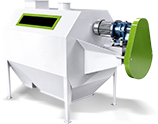
Rotary Drum Cleaner
Removes stones, sand, and heavy impurities from granular materials.
Capacity
15-50 T/H
Drum Speed
12-21 rpm
02.
Raw Material Crushing & Pellet Size Control
Grinding granularity is adjustable to match various poultry breeds and growth stages.
After grinding, the material is mechanically conveyed to the batching bin, ready for use.
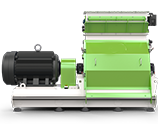
Hammer Mill
Grinds materials (≤5cm in size) into powder; screen mesh size is customizable.
Capacity
3-50 T/H
Grinding Size
0.5 – 20mm
03.
Batching & Mixing
Utilizes electronic weighing scales controlled by a PLC. Once weighed, the materials are fed into the mixer.
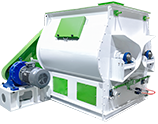
Twin-Shaft Paddle Mixer
Designed for mixing powders, granules, flakes, lumps, irregular materials, and viscous substances.
Material
Carbon Steel, Stainless Steel
Batch Capacity
250-2000 kg/P
04.
Conditioning & Pelleting
The mixed powder is conditioned with high-temperature steam. Next, it is fed into the ring die pelletizer for pelletizing. The die aperture is adjustable.
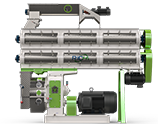
Ring Die Feed Making Machine
Efficiently compresses powder into robust, durable pellets.
Power
22-315 kW
Capacity
1-40 T/H
05.
Cooling
The hot, high-moisture pellets are cooled and dehumidified to reach room temperature and safe storage moisture levels.
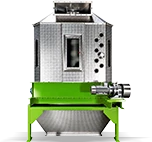
Counterflow Cooler
Cools high-temperature pellets to reach room temperature.
Cooling Time
6-15 min
Capacity
1-40 T/H
06.
Screening
The cooled pellets are graded via a vibrating screen to remove powder and fines.
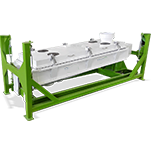
Rotary Grading Screen
Screens granular materials into large, medium, and small finished products.
Capacity
3-40 T/H
Power
1.5-5.5 kW
07.
Packaging & Automated Control System
Electronic scales allow custom packaging (10kg-50kg or ton bags). Fully automated lines with optional robots. Control modes: Manual, semi-auto, or full-auto.
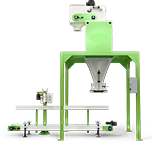
Fully Automatic Packing Scale
Packages materials, with sealing options: heat sealing, thread sewing, or hybrid sealing.
Packaging Speed
2-8 min/bag
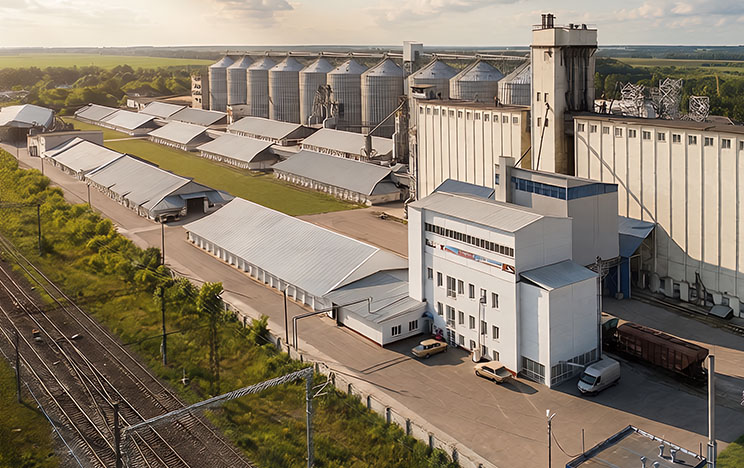
Animal Feed Plant Engineering Projects
Serving the global market, we support large breeding groups and feed production enterprises. The following cases showcase our full animal feed production line projects across various scales and categories. Every solution is proven by large-scale production.
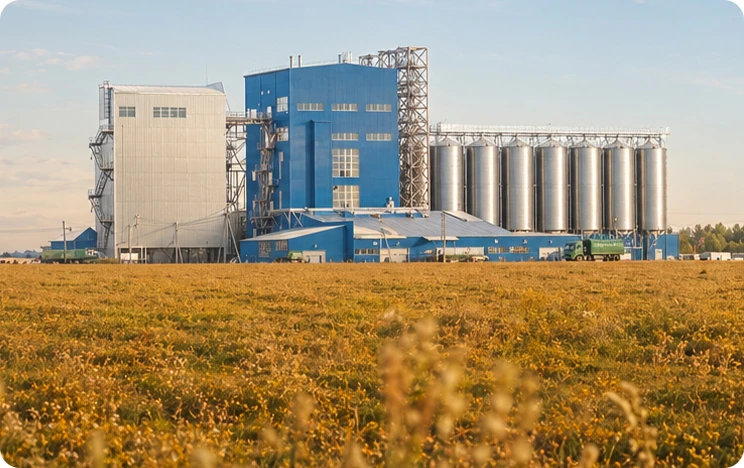
10 Poultry Feed Production Line In Algeria
Region : Africa
Application : poultry feed production line
Output : 10 T/H
Product Type : feed
3-5 t/h complete chicken feed pellet production line in Zimbabwe
Region : Africa
Application : chicken feed production line
Output : 10-15 T/H
Product Type : pellet feed
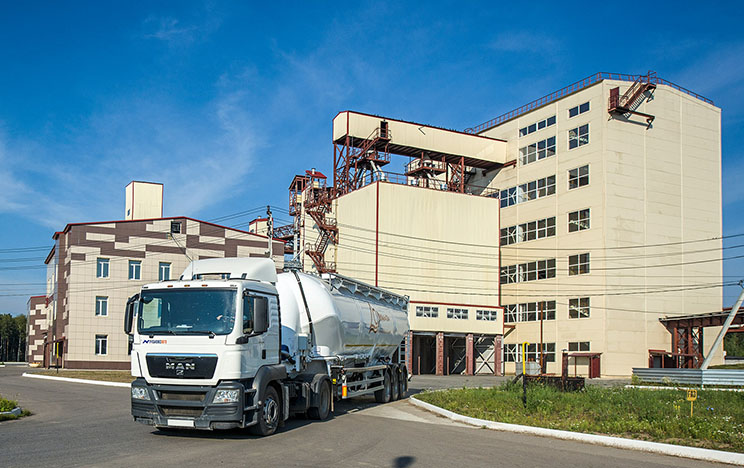
5 T/H Animal Powdered Feed Production Line In Kenya

Region : Africa
Application : animal feed production line
Output : 5T/H
Product Type : powdered feed
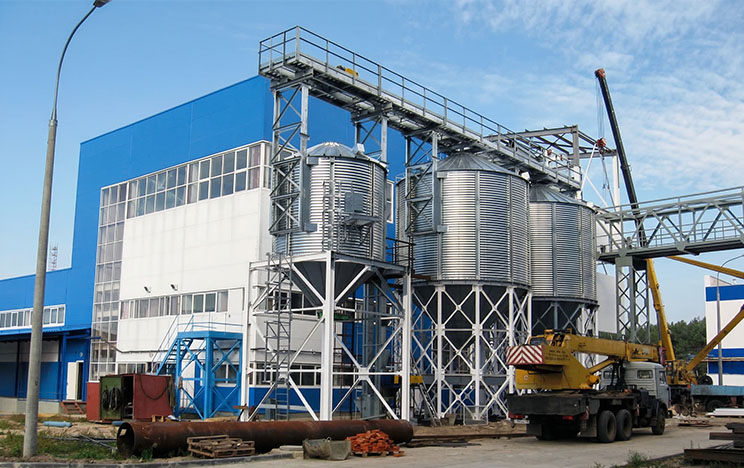
5-6 T/H Animal Feed Plant In Ethiopia
Region : Africa
Application : animal feed production line
Output : 5-6 T/H
Product Type : pelletized feed
Animal Feed Production Questions Answered
Find professional answers to common questions, covering the key processes and important considerations in animal feed production.
1. Can feed pellet machines be used for on-farm feed production?
Yes, but our feed pellet machines are more suitable for farms with a daily feed demand of over 8 tons. If your farm needs to produce a large amount of pellet feed every day, setting up your own pelleting system is usually more flexible and more convenient for controlling feed formulas than purchasing finished feed long-term.
If you use raw materials such as corn, soybean meal, and forage, you also need to configure a crusher to process the materials before pelleting. If the pellet feed produced is for both self-use and external sales, you can add equipment such as cooling, screening, and packaging as needed, so that the finished products are more suitable for storage, transportation, and sales.
2. Is the current output insufficient? Do we need to switch to a larger pellet machine?
Yes, but it depends on your current equipment configuration.
If you are currently using only one pellet machine, simply replacing it with a larger model can usually increase the output.
If you already have a complete feed production line, we will first check whether your existing equipment for crushing, mixing, and conveying can keep up with the new output. Then, we will give you suggestions on whether to replace only the pellet machine or upgrade other equipment together.
3. What is the difference between a feed pellet machine and a feed production line?
A feed pelletizer is mainly responsible for processing the already treated powdery feed into pellets. It is a key piece of equipment in pellet feed production.
If you already have front-end equipment for crushing and mixing, and only need to add the pelleting step, you can purchase a pellet machine separately.
If you are building a new feed factory without existing processing equipment, you usually need to configure a complete production line to complete the entire production process from raw material processing to finished product packaging.
4. What other equipment is needed to produce pellet feed besides a feed granulator?
What equipment needs to be configured mainly depends on your raw material status and production scale.
If you already have processed powdery mixed feed, configuring a pellet machine alone is enough for pellet processing; if you use raw materials such as corn, soybean meal, and forage to produce feed yourself, you usually also need to configure a crusher and a mixer.
If it is a feed factory or a project requiring long-term stable production, you can also add equipment such as cooling, screening, conveying, and packaging according to output needs to form a more complete production process.
5. How to determine whether to replace the feed pellet machine with a larger capacity one?
If your pellet machine can no longer meet current production needs, you need to consider upgrading to a larger specification.
For example, if the daily production time is getting longer and the equipment is running at full load but still cannot complete the required output, or if you plan to expand the farming scale or increase feed sales volume in the future, you can consider a higher capacity configuration in advance.
If the output increase is only temporary, it is not necessary to replace the equipment immediately. We can help choose a more suitable equipment solution based on your current output needs and future development plans.
6. What components need to be replaced for the long-term operation of a feed pellet machine?
During long-term use, the ring die and roller are the components that most often need to be checked and replaced, because they directly participate in pellet forming, and their wear condition affects production results and output.
Besides the ring die and roller, components like bearings and seals also need regular inspection. The specific replacement cycle varies according to daily production time, feed raw material type, and equipment usage.
Timely maintenance and replacement of wear parts can reduce downtime and ensure long-term stable operation of the equipment.
7. Should a newly built feed factory purchase a single pellet machine or a complete production line?
If you are building a feed factory for the first time, you usually need to configure a complete production line according to production goals, rather than just purchasing a single pellet machine. Because from raw material processing to finished pellets, front-end equipment such as crushing and mixing is needed, as well as follow-up equipment like cooling, screening, and packaging configured according to demand.
If you already have some feed processing equipment and just want to add pellet production capacity, you can configure a pellet machine separately. RICHI can provide a suitable equipment combination plan based on your output needs, raw material situation, and existing equipment.
More Animal Feed Pellet Machines
Beyond poultry feed, our solutions cover pelleting for ruminants, livestock, aquaculture, and pets. We deliver tailored production configurations and full-line support to ensure stable operations across diverse feed applications.
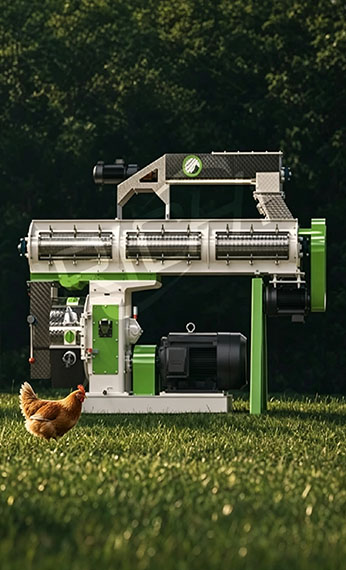
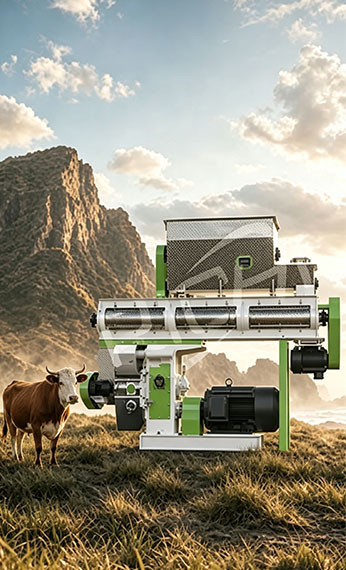
Cattle feed making machine
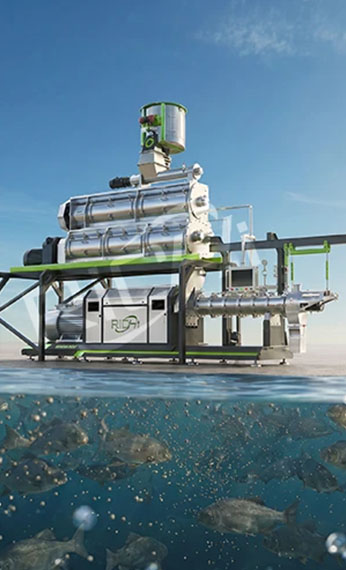
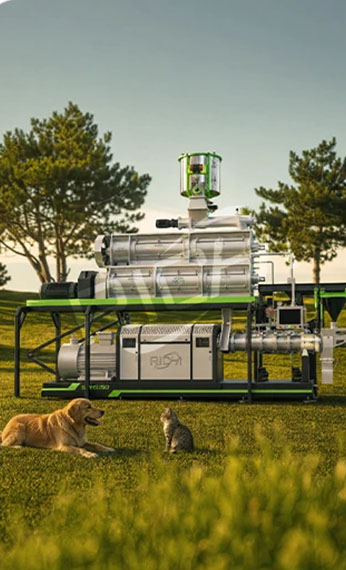
Pet food extruder machine

RICHI Machinery: Powering Global Pellet Production
Committed to pioneering pellet technology and industrial engineering, we leverage over 30 years of R&D expertise and global experience.
We optimize design, manufacturing, and system integration to drive the feed, biomass, and specialty industries toward efficiency, intelligence, and sustainability.
Our expert team delivers end-to-end pellet production solutions that meet international standards and align with your strategic goals for productivity and long-term growth.
60000 +m2
Square Meters of Our Factory
2000 +
Projects Running Worldwide
140 +
Countries of Our Client
200 +
Numbers of Our Team
Global Expertise & System Excellence
Advanced pellet production systems combine robustness and future-readiness, establishing industry benchmarks through technological integration and innovation.
Reliable Quality
Every machine undergoes precise and rigorous quality inspections.
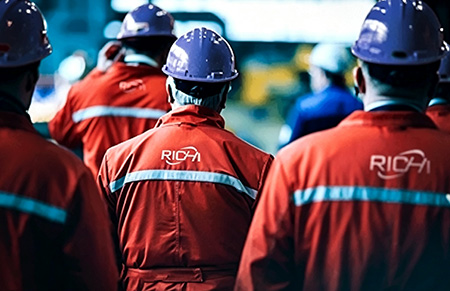
Worry-Free Warranty
Supported by a global service network with fast response times.
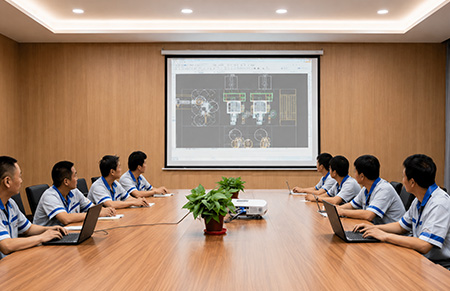
Professional Support
Experienced technical teams provide full-cycle assistance.

Secure Payments
Multi-layer encryption ensures safe and transparent transactions.

Global Logistics
Efficient worldwide shipping ensures timely delivery to any location.
Start Your Pellet Project
Pellet production is a systematic process. Provide your raw materials and capacity needs, and we’ll create a customized solution with professional guidance for commercial production.

Address: South of intersection of Xingda Road & Hongyuan Road, Wuzhi, Jiaozuo City, Henan Province,China

Tel/WhatsApp: + 86 136 0866 8310

E-mail: enquiry@richimachinery.com



© HENAN RICHI MACHINERY CO., LTD 1995-2026 Product Line-Up / Privacy Policy
Contact Us
Please send your requirements, RICHI’s consultants will get back to you quickly.

