

Complete Poultry Feed Production Line Solutions for Profitable Feed Production
- Custom poultry feed production systems for chickens, ducks & geese…
- Turnkey engineering solutions from process design to reliable production
- Manual / Semi-Automatic / Fully Automatic Options
- Capacities from 1-100 t/h All Available
RICHI Poultry Feed Production Line Overview
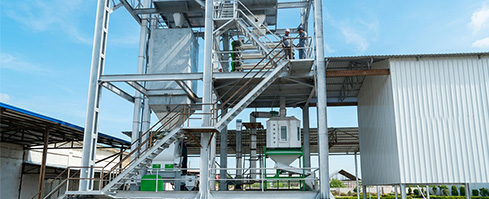
Customized to client capacity, single feed production line output ranges from 1 to 100+ t/h. We offer full turnkey solutions from raw material intake to packaging, as well as segmented upgrades for existing facilities.
As a specialist in poultry feed equipment, we deliver advanced machinery alongside lasting value for our clients.
Feed Production Line Highlights
Complete Process Flow of Poultry Feed Mill Line
Whether your output is 1 or 100 t/h, high quality is guaranteed, regardless of scale. We ensure excellence through 7 strictly controlled stages, using professional feed production equipment to craft every pellet with care.
① Raw Material Processing
② Crushing & Pellet Size Control
③ Batching & Mixing
④ Conditioning & Pelleting
⑤ Cooling
⑥ Screening
⑦ Packaging & Automated Control System
Rotary Drum Cleaner
Removes stones, sand, and heavy impurities from granular materials.
Capacity : 15-50 T/H
Drum Speed : 12-21 rpm
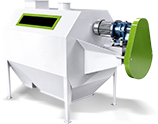
① Raw Material Processing
Once received, raw materials undergo screening to eliminate coarse impurities. Cleaned materials are stored in dedicated silos with clear labeling.
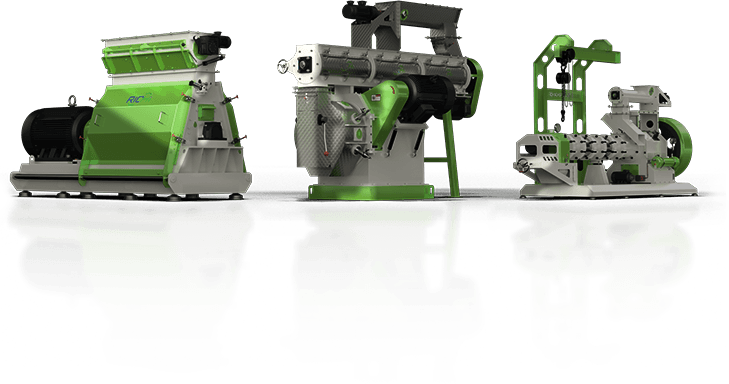
Hammer Mill
Grinds materials (≤5cm in size) into powder; screen mesh size is customizable.
Capacity: 3-50 T/H
Grinding Size: 0.5mm – 20mm
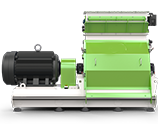
② Raw Material Crushing & Pellet Size Control
Grinding granularity is adjustable to match various poultry breeds and growth stages.
After grinding, the material is mechanically conveyed to the batching bin, ready for use.
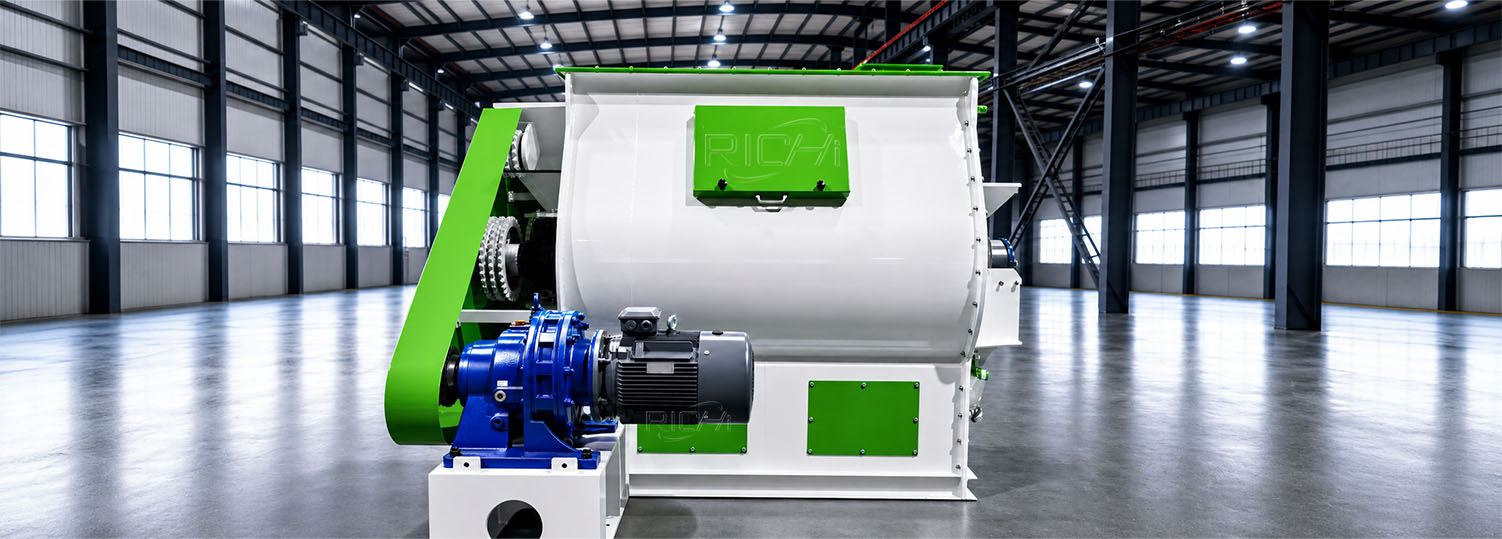
Twin Shaft Paddle Mixer
Designed for mixing powders, granules, flakes, lumps, irregular materials, and viscous substances.
Material: Carbon Steel, Stainless Steel
Batch Capacity: 250-2000 kg/P
③ Batching & Mixing
Utilizes electronic weighing scales controlled by a PLC. Once weighed, the materials are fed into the mixer.
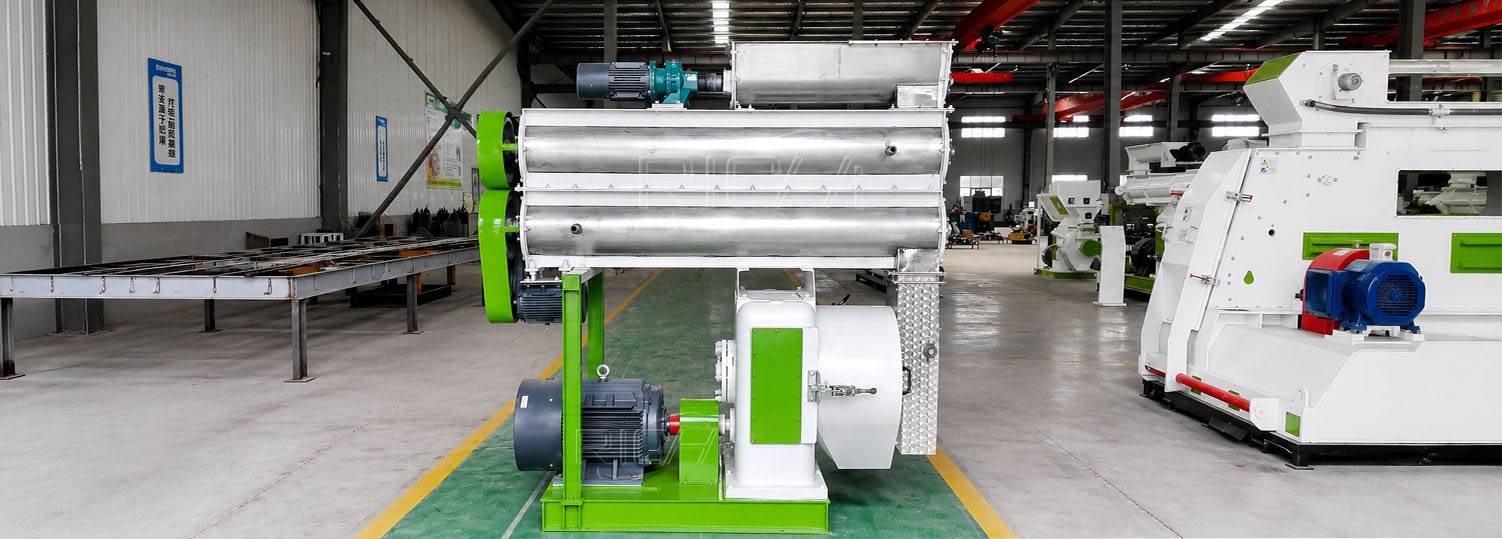
Poultry Feed Pellet Machine
Efficiently compresses powder into robust, durable pellets.
Power: 22-315 kW
Capacity: 1-40 T/H
④ Conditioning & Pelleting
The mixed powder is conditioned with high-temperature steam. Next, it is fed into the ring die pelletizer for pelletizing. The die aperture is adjustable.
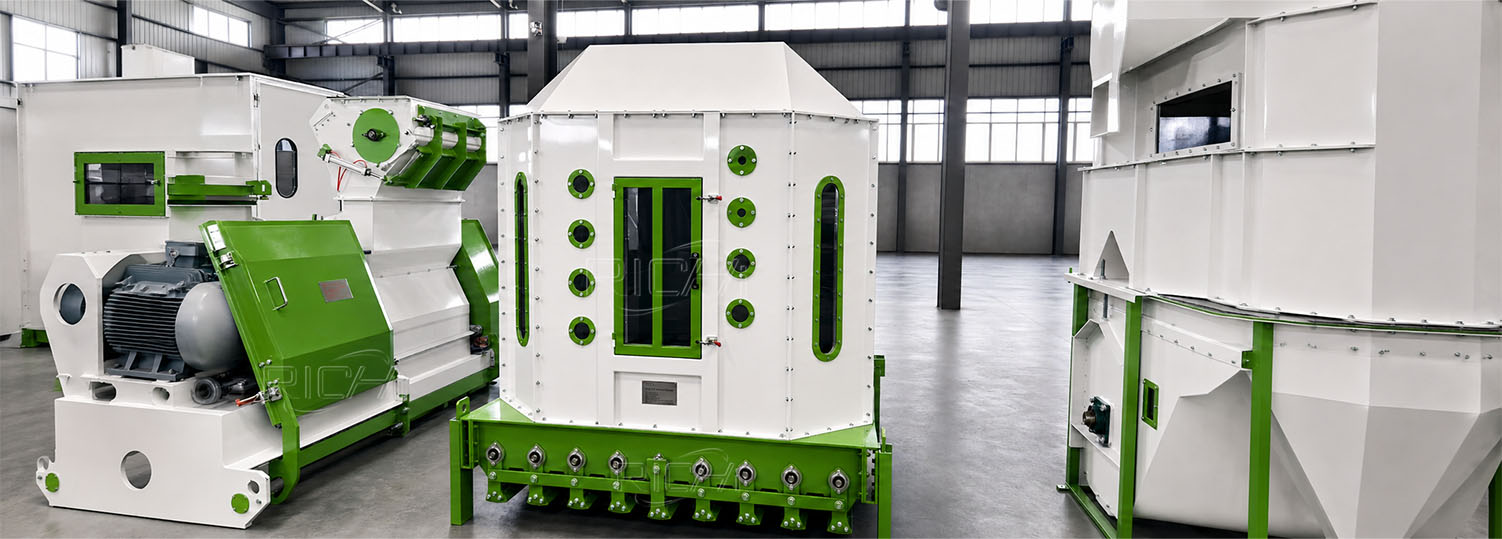
Counter-flow Cooler
Cools high-temperature pellets to reach room temperature.
Cooling Time: 6-15 min
Capacity: 1-40 T/H
⑤ Cooling
The hot, high-moisture pellets are cooled and dehumidified to reach room temperature and safe storage moisture levels.
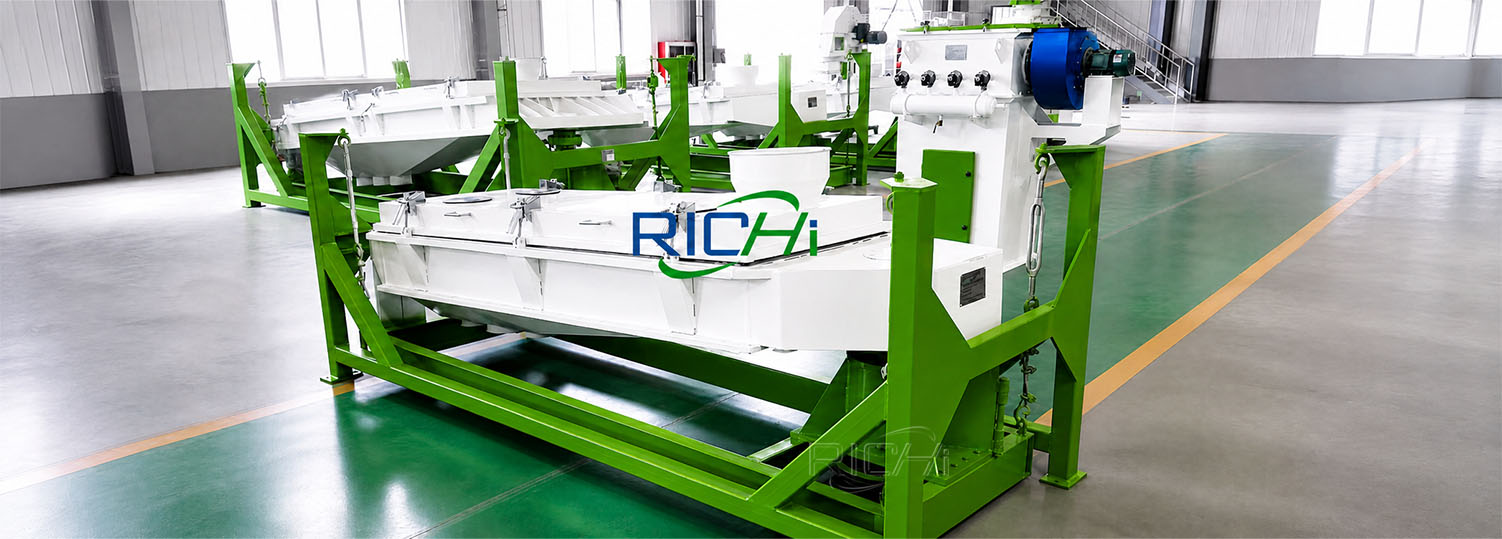
Rotary Grading Screen
Screens granular materials into large, medium, and small finished products.
Capacity: 3-40 T/H
Power: 1.5-5.5 kW
⑥ Screening
The cooled pellets are graded via a vibrating screen to remove powder and fines.
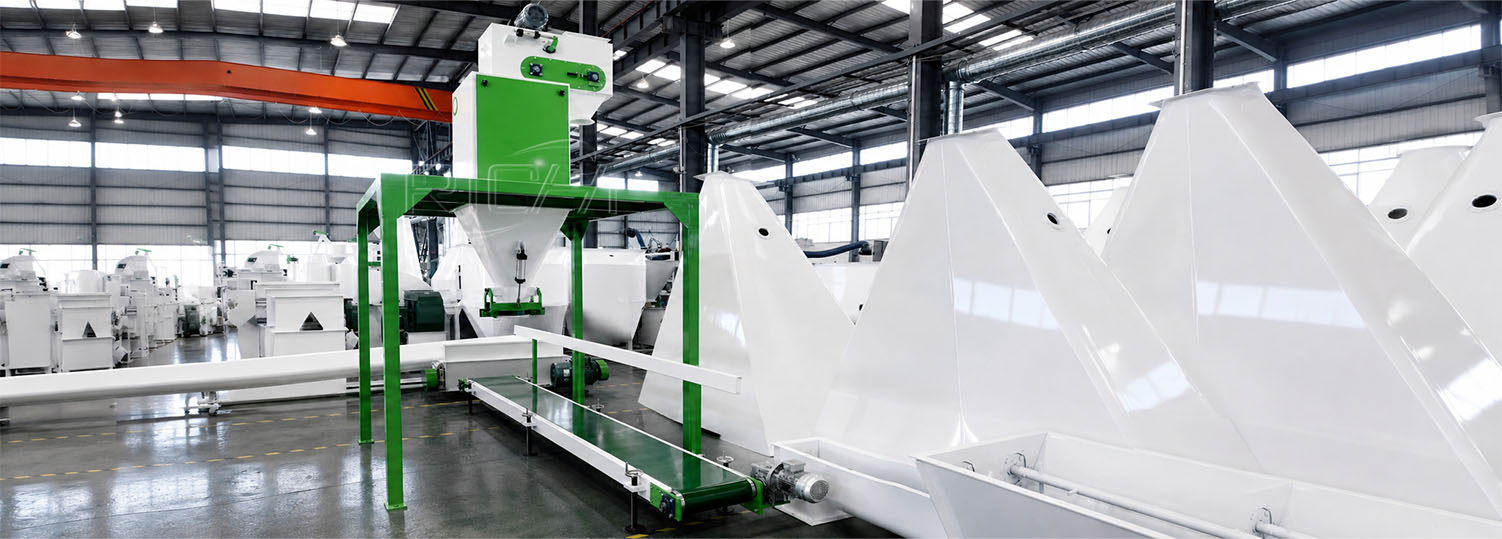
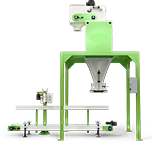
Fully Automatic Packing Scale
Packages materials, with sealing options: heat sealing, thread sewing, or hybrid sealing.
Packaging Speed: 2-8 minutes/bag
⑦ Packaging & Automated Control System
Electronic scales allow custom packaging (10kg-50kg or ton bags). Fully automated lines with optional robots. Control modes: Manual, semi-auto, or full-auto.
Types of Feed Produced by Poultry Feed Production Line
Contrary to belief, this poultry feed making line is not limited to chicken feed. It produces duck, goose, and livestock supplements by simply adjusting pellet specs and processing. Add a precision batching system, and it handles concentrates and premixes as well.
It’s not just a poultry feed line—it’s a versatile feed platform for all.
Chicken Feed
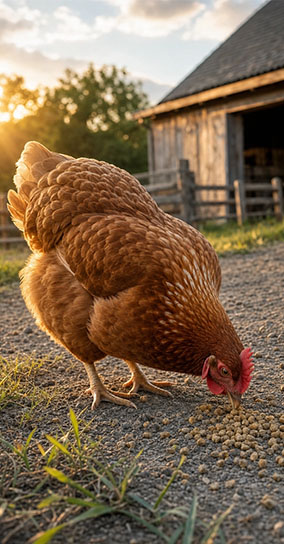
Chicken Feed
- Starter Feed: 0.8–1.5mm fine granules or crumbles. Easy to eat and digest.
- Grower Feed: 2.0–3.0mm standard granules. Strengthens the gizzard and improves uniformity.
- Layer & Finisher Feed: 3.0–4.0mm dense, solid granules.
Duck Feed
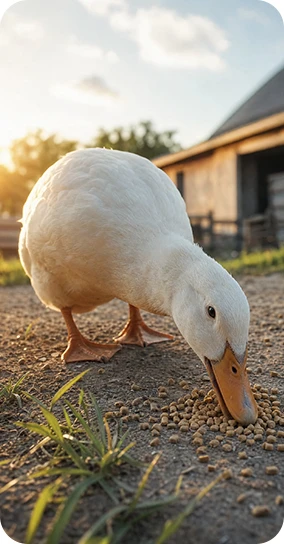
Duck Feed
- Starter Feed: 1.5–2.5mm small granules for high initial intake.
- Grower Feed: 2.5–3.5mm medium granules for stable growth.
- Finisher & Layer Feed: 3.5–6.0mm large granules for fast feeding and strong satiety.
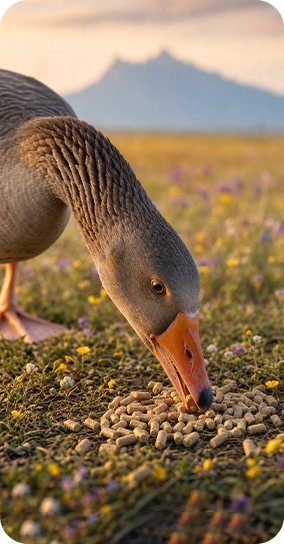
Goose Feed
Goose Feed
- Starter Feed: 2.5–3.0mm medium granules with great palatability.
- Grower & Finisher Feed: 5.0–8.0mm large-diameter granules to meet high feed intake demands.
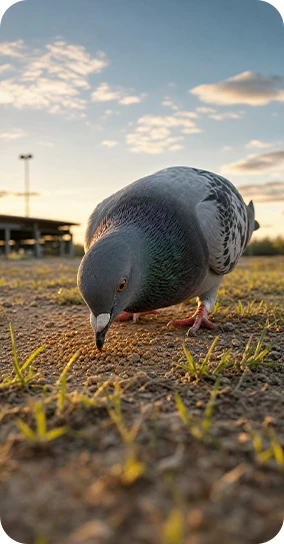
Pigeon Feed
Pigeon Feed
- Particle Size: 1.5–3.5mm, moderate size to prevent selective feeding.
- Texture: Round, uniform, and low-dust to reduce respiratory irritation.

Quail Feed
Quail Feed
- Starter Feed: 1.2–2.0mm ultra-fine granules, suitable for small beaks.
- Finished Feed: 2.0–3.0mm high-density small granules.
Flexible Capacity & Custom Solutions for Poultry Feed Pellet Line
Ranging from 1 to 60+ t/h, we go beyond numbers. We tailor the solution to your real needs—scale, expansion, space, and budget.Our production capacity covers:
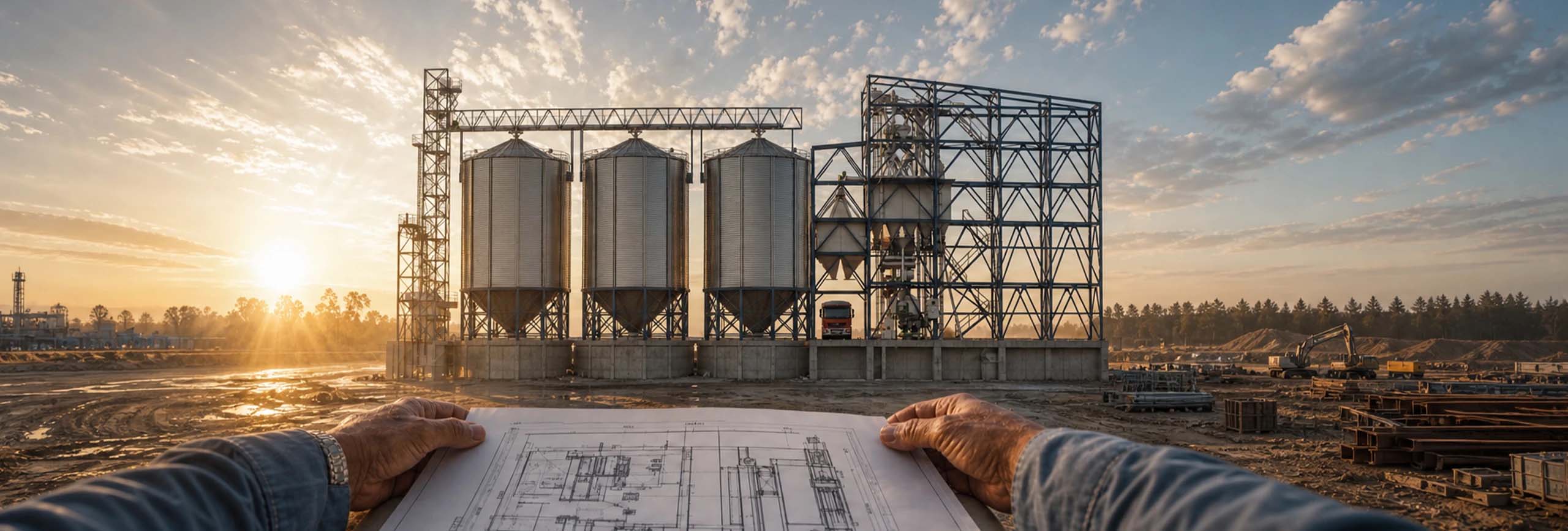
Our production capacity covers:
Advanced Design & Performance Advantages of Poultry Feed Line
For industrial poultry feed production, the real test is long-term stability, efficiency, and low cost—not just advanced tech.
Our line is built for this: polished from formulation to wear parts, delivering proven performance.

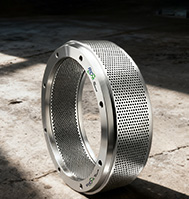
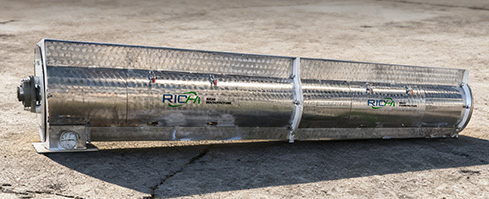
Versatile Compatibility
Covers diverse formulas. Enables rapid feed switching via variable speed, die selection, and conditioning adjustments.
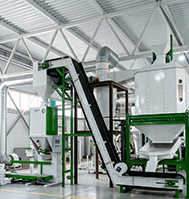
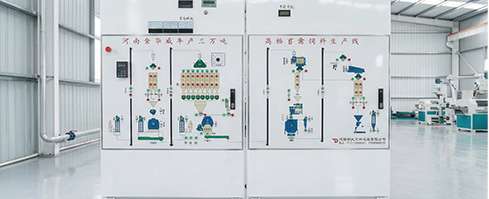
Flexible Automation Levels
From manual to semi-auto and full plant control, tailored to your budget and staff. The system supports upgrades without full replacement.
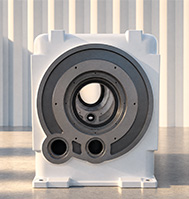
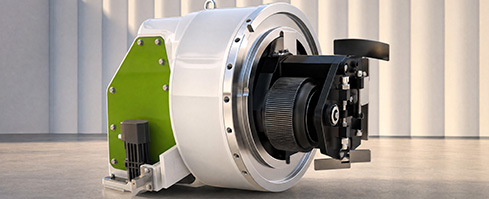
Built for Heavy Duty
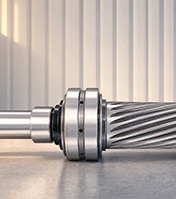
Built with high-strength steel and precision, core transmission parts are engineered for heavy loads. This ensures stability, minimizes overhauls, and maximizes equipment life.
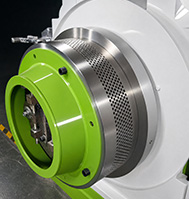
Superior High-Fiber Processing
Reinforced rollers and extended conditioning stabilize high-fiber pelleting (cottonseed, palm, etc.), reducing ingredient costs.
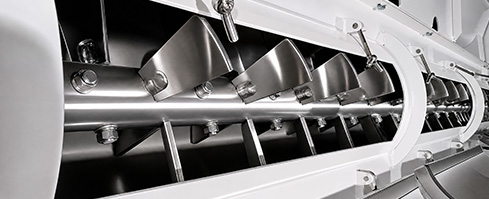
Scalable Design
Upgrade-ready layout and expandable controls. Scale up seamlessly to save on costly rebuilds.
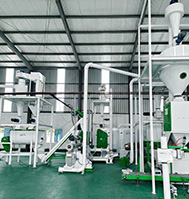
Extended Wear Parts Life
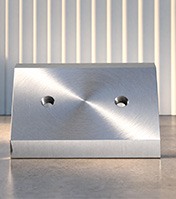
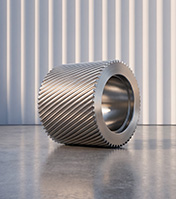
High-wear alloy parts (rings, rollers, etc.) ensure longer life and lower costs—minimizing downtime for uninterrupted production.

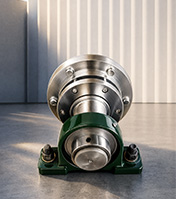
Animal Feed Production Line Engineering Projects
We are a feed machinery manufacturer equipped for major projects, offering end-to-end solutions from design and manufacturing to installation and support.
The following delivered pellet production line cases highlight our strong execution in large-scale project delivery.
10 Poultry Feed Production Line In Algeria
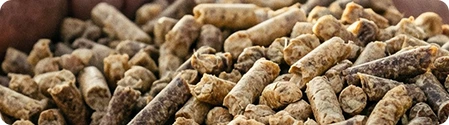
Region : Africa
Application : poultry feed production line
Output : 10 T/H
Product Type : feed
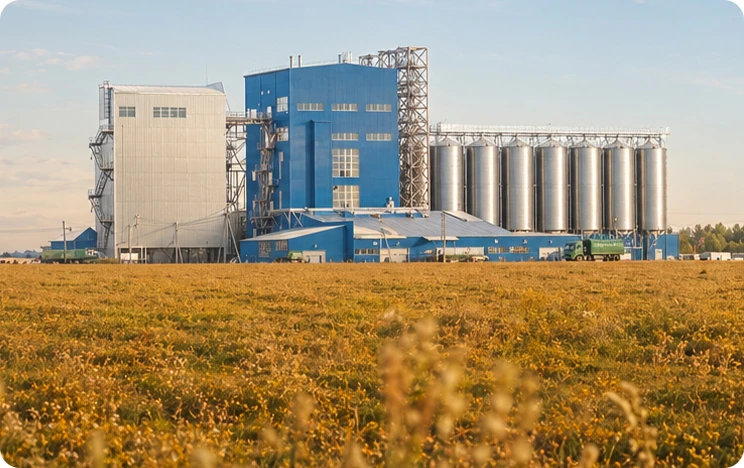
3-5 t/h complete chicken feed pellet production line in Zimbabwe
Region : Africa
Application : chicken feed production line
Output : 10-15 T/H
Product Type : pellet feed
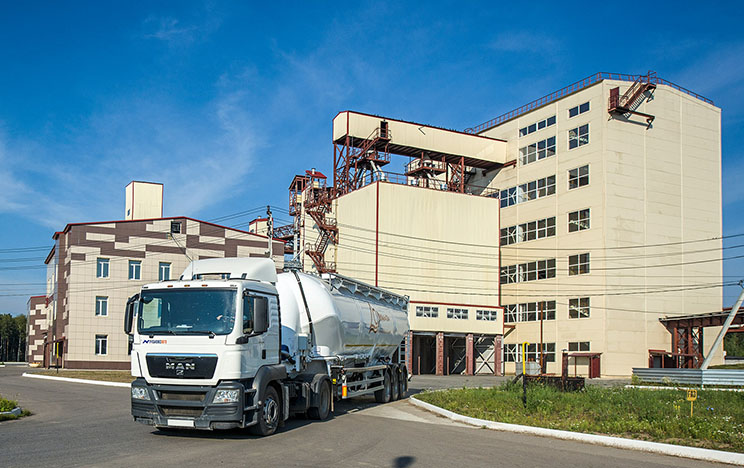
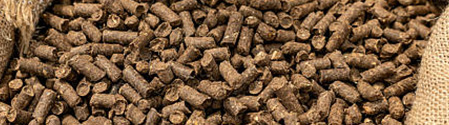
5 T/H Animal Powdered Feed Production Line In Kenya

Region : Africa
Application : animal feed production line
Output : 5T/H
Product Type : powdered feed
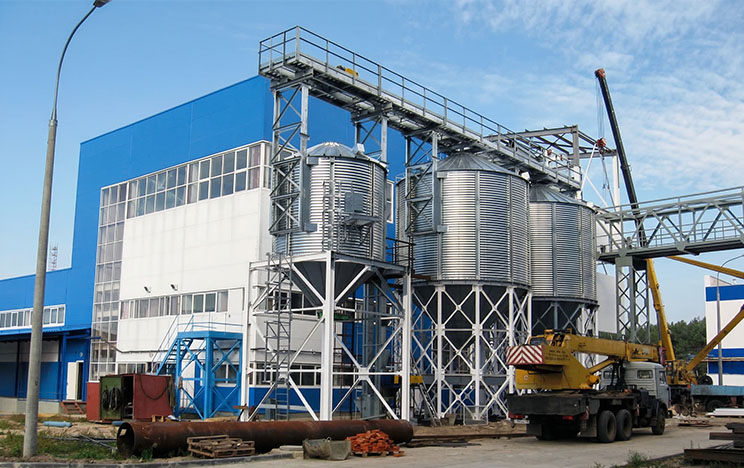
5-6 T/H Animal Feed Plant In Ethiopia
Region : Africa
Application : animal feed production line
Output : 5-6 T/H
Product Type : pelletized feed
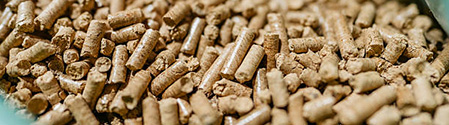
Poultry Feed Production Questions Answered
Find professional answers to common questions, covering the key processes and important considerations in animal feed production.
1. What processing steps are involved in turning raw materials into finished animal feed pellets?
Turning raw materials into finished pellets typically involves ten core steps:
2. How do I quickly switch between different animal feed types?
The key to fast switching lies in preparation and standardized operations.
Before switching, confirm the required ring die aperture, screen specifications, formula parameters, and packaging details for the next batch. Have all necessary spare parts ready.
During switching, thoroughly clean the interior of the mixer, pellet mill, cooler, and conveyors to remove residual materials and prevent cross-contamination. Then, adjust the process parameters for the new formula, including changing grinding screens, loading the new formula, replacing the ring die, adjusting roller clearance, setting conditioning temperature and steam level, adjusting the crusher roller gap, and changing grading screens.
After switching, run a small trial batch to test indicators like pellet size, hardness, and water stability. Only proceed to mass production after confirmation.
Reasonable production sequencing can reduce switching frequency. It is recommended to schedule production by pellet size, formula similarity, and color: large pellets before small, light colors before dark, and standard formulas before those with high additives, to minimize cleaning work.
Standardize the switching operation, clarify the key points and time requirements for each step. Operators should execute according to the standard, record the switching time, and continuously optimize the process, thereby improving the overall utilization rate of the production line.
3. How do I configure a production line that fits my capacity needs?
Selecting a animal feed production line isn’t just about picking a specific ‘tons-per-hour’ figure; it’s about fitting the equipment to your actual production scenario. We help you determine the most suitable configuration by analyzing the following:
① Daily Output Requirements
First, we clarify the total daily feed volume required. This can be calculated based on your farming scale and daily feed intake. By combining this with your planned daily operating hours, we calculate the necessary hourly capacity. This is the fundamental basis for determining the line’s scale.
② Expansion Potential (Future-Proofing)
Production lines have a long lifecycle. We recommend reserving space for future expansion during the initial setup. This includes extra interfaces in the control system, physical space in the layout for added machines, and capacity margins in key units. This allows for a smooth transition when you expand, avoiding the cost of rebuilding later.
③ Site & Raw Material Conditions
Your site area determines the layout (single-story vs. multi-story). Your raw materials determine the equipment type: for instance, a high proportion of high-fiber materials (like cottonseed meal) requires a reinforced pelleting system, while high oil content requires liquid addition systems.
④ Level of Automation
Based on your investment budget and available operators, you can choose between Manual, Semi-Automatic, or Fully Automatic control modes. A fully automatic system uses centralized PLC management for formula recall, data monitoring, and fault alarms, significantly reducing manual intervention.
⑥ Our Proposal Process
We start by discussing your daily output, site dimensions, raw materials, and budget. Based on this, we issue a preliminary proposal detailing the equipment selection. Once confirmed, we move into the design and manufacturing phase.
Ultimately, configuring a production line is about finding the optimal balance between output capacity, site conditions, and your investment budget.
4. How do I get technical support when the feed production line has a fault?
We have established a multi-level technical support system to ensure you receive a rapid response whenever equipment issues arise:
① Remote Diagnostic Support
You can contact our technical team via phone, video, or remote communication software. Based on the symptoms, operating parameters, and alarm codes you provide, our engineers will diagnose the cause remotely and guide your on-site staff to troubleshoot. Most common faults can be resolved remotely, eliminating the need to wait for on-site personnel.
② On-site Service Response
For complex issues that cannot be solved remotely, we will dispatch after-sales engineers to your site based on your location to ensure the problem is resolved in a timely manner.
③ Spare Parts Supply Guarantee
Upon delivery, we provide a detailed spare parts list and purchasing channels. We recommend stocking common wear parts in advance. In emergencies, we assist customers in coordinating spare parts quickly to minimize equipment downtime.
④ Preventive Maintenance Mechanism
We provide equipment maintenance manuals and inspection standards to help you establish a preventive maintenance plan. By regularly checking wear parts, transmission components, and electrical systems, we can intervene before failures occur, reducing unexpected downtime.
⑥ Operator Training
At the time of delivery, we provide systematic training for your on-site operators, covering equipment operation, fault identification, and emergency procedures. With basic troubleshooting skills, operators can handle minor issues independently during daily operation.
⑦ Long-term Technical Support Agreement
For customers with large-scale production lines, we offer long-term technical support agreements. These contracts define annual inspection frequencies and priority service response, ensuring continuous technical support throughout the equipment’s lifecycle.
5. What is the price of a poultry feed production line?
If you are planning to build a complete poultry feed processing plant, here is a reference for the total investment based on different capacities:
- 1–2 T/H: Approx. 30,000–60,000
- 3–4 T/H: Approx. 60,000–200,000
- 5–6 T/H: Approx. 80,000–250,000
- 10 T/H: Approx. 170,000–320,000
- 15 T/H: Approx. 240,000–400,000
- 20 T/H: Approx. 440,000–600,000
- 30 T/H: Approx. 600,000–700,000
- 40 T/H: Approx. 700,000–800,000
- 60 T/H: Usually over $1,100,000
- Higher capacities: Available up to 120 T/H
Note: Even with the same capacity, the final price can vary significantly due to differences in production processes, equipment configuration, automation levels, raw materials, and factory layout.
Therefore, feed production lines are usually customized based on your specific needs, and the final quote will vary accordingly.
Explore RICHI Other Pellet Production Solutions
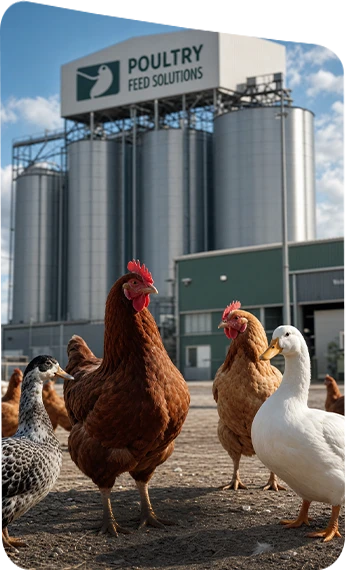
Poultry feed production line
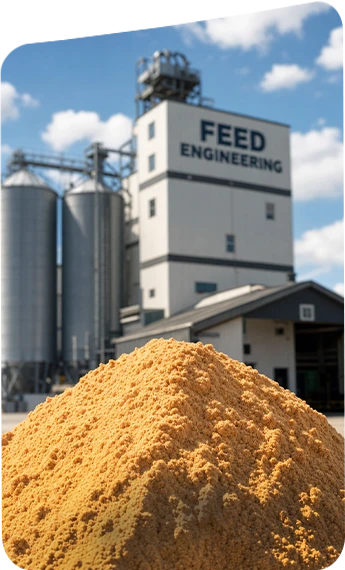

RICHI Machinery: Powering Global Pellet Production
Committed to pioneering pellet technology and industrial engineering, we leverage over 30 years of R&D expertise and global experience.
We optimize design, manufacturing, and system integration to drive the feed, biomass, and specialty industries toward efficiency, intelligence, and sustainability.
Our expert team delivers end-to-end pellet production solutions that meet international standards and align with your strategic goals for productivity and long-term growth.
60000 +m2
Square Meters of Our Factory
2000 +
Projects Running Worldwide
140 +
Countries of Our Client
200 +
Numbers of Our Team
Global Expertise & System Excellence
Advanced pellet production systems combine robustness and future-readiness, establishing industry benchmarks through technological integration and innovation.
Reliable Quality
Every machine undergoes precise and rigorous quality inspections.
Worry-Free Warranty
Supported by a global service network with fast response times.
Professional Support
Experienced technical teams provide full-cycle assistance.

Secure Payments
Multi-layer encryption ensures safe and transparent transactions.
Global Logistics
Efficient worldwide shipping ensures timely delivery to any location.
Start Your Pellet Project
Pellet production is a systematic process. Provide your raw materials and capacity needs, and we’ll create a customized solution with professional guidance for commercial production.

Address: South of intersection of Xingda Road & Hongyuan Road, Wuzhi, Jiaozuo City, Henan Province,China

Tel/WhatsApp: + 86 136 0866 8310

E-mail: enquiry@richimachinery.com



© HENAN RICHI MACHINERY CO., LTD 1995-2026 Product Line-Up / Privacy Policy
Contact Us
Please send your requirements, RICHI’s consultants will get back to you quickly.

