

10 T/H Wood Pellet Plant in the US
Fully Automated Bio Wood Pellet Production Line (Turnkey Project)
Design Capacity :
10 T/H
Pellet Application :
Biomass fuel pellets
Pellet Specifications : Pellet diameter 6-12 mm, pellet length 15-45mm
Raw Materials : Sawdust, wood dust, wood shavings, wood chips, bark, forest logging residues, Southern pine, oak
Solution Features : Automated control, energy-saving design, multi-raw material compatibility, customized configuration
U.S. Wood Pellet Market: Key Insights
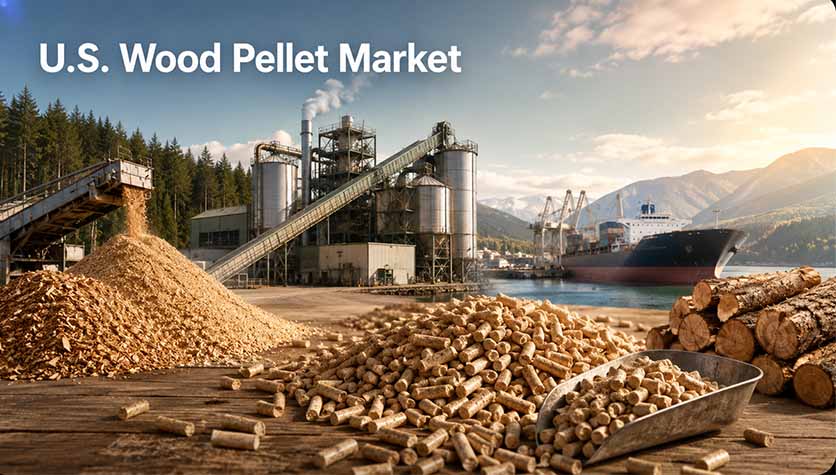
The US is one of the world’s largest producers and exporters of wood pellets, with abundant forest resources and a mature timber processing industry. Driven by growing global demand for renewable energy, the US wood pellet market has seen steady development. Products are widely applied in biomass power generation, industrial boilers, and residential heating, and are exported in large quantities to markets including Europe, Japan, and South Korea.
1.
Current Outlook
Currently, US wood pellet production is concentrated in the Southeast. This region boasts rich forest resources and ample raw materials, attracting many large-scale manufacturers.
As international demand grows, companies are expanding operations and adopting automated equipment to boost efficiency and product quality. At the same time, stricter requirements for quality, production stability, and sustainability certifications are pushing enterprises to optimize their processes and enhance competitiveness.
2.
Key Challenges
Although the US has abundant timber resources, wood pellet production still faces practical challenges. The supply of high-quality raw materials, such as sawdust and shavings, is largely affected by the timber processing industry.
Meanwhile, raw material and transportation costs continue to rise. Strong export demand has also, to some extent, increased the pressure on domestic supply. In addition, stricter environmental regulations and sustainability certification standards are raising production and operational costs for companies.
3.
What’s Next
The US wood pellet market is expected to keep growing in the coming years.
On one hand, the global energy transition will drive up demand for biomass fuels, creating more market opportunities for the industry.
On the other hand, the industry will focus more on improving production efficiency, reducing energy consumption, and advancing smart manufacturing. These efforts aim to enhance product competitiveness and better meet the demand for high-quality wood pellets in both domestic and international markets.
Client Project Details
Performance that’s proven, not promised. Each project showcases the rock-solid reliability of RICHI’s animal feed equipment under the demands of real production. (Tap the title for details.)
Process Design for Customized Wood Pellet Production Project in the US
Our engineers developed a tailored solution by deeply addressing the client’s specific challenges and pain points during the process design phase.
When building a wood pellet factory, clients often have key concerns:
The final biomass pellet production line was engineered with the following core stages:
1. Raw Material Processing
2. Crushing
3. Drying
4. Mixing
5. Pelletizing
6. Cooling
7. Screening
8. Packaging
1. Raw Material Handling
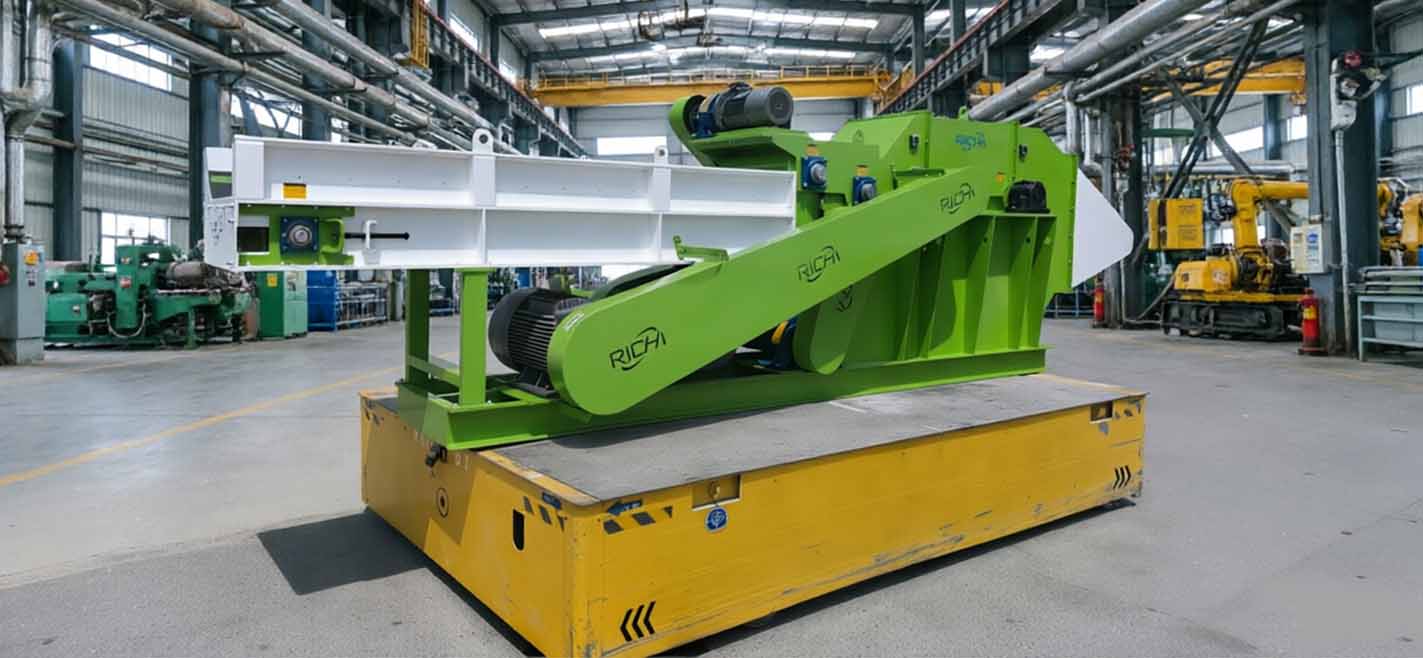
For large materials like wood chips, branches, and forest residues, a wood chipper is used first. This pre-processes the materials to the right size for crushing, improving the efficiency of the next steps.
2. Crushing
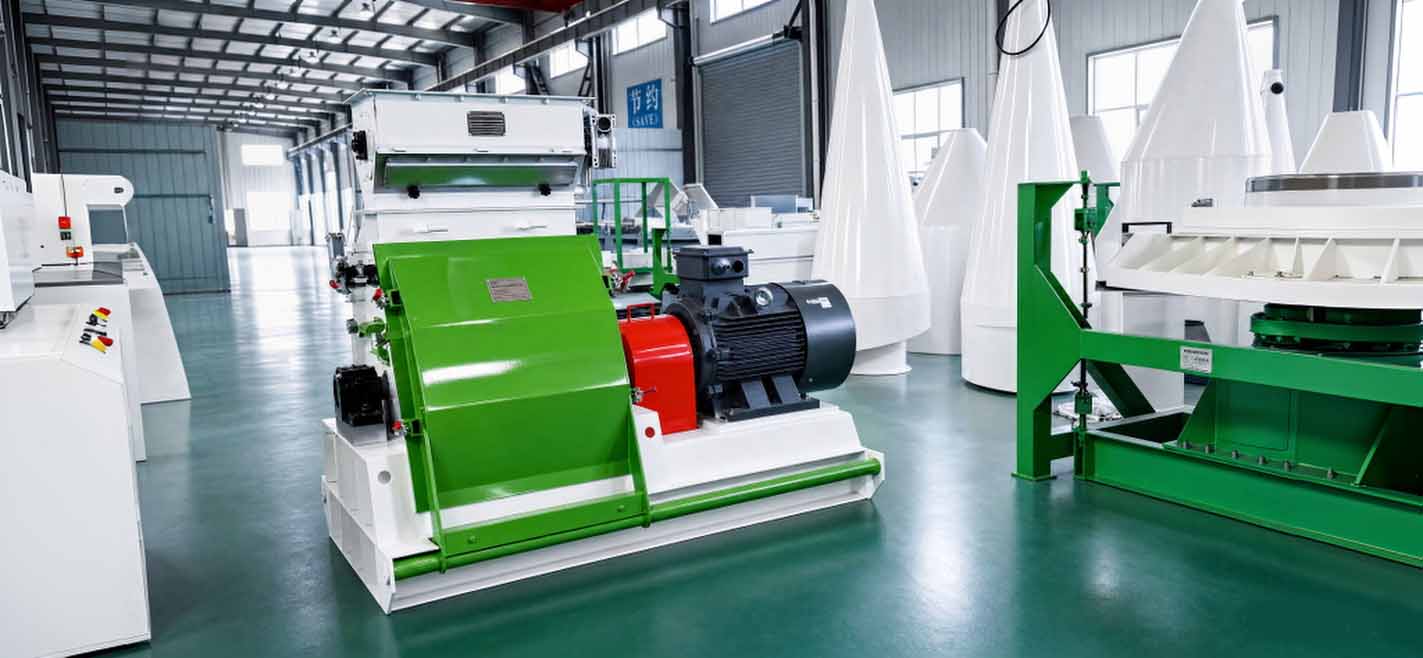
The chipped wood enters the grinding system to be further processed into a fineness meeting pelletizing requirements (usually ≤5mm). This ensures uniform material for the subsequent drying and pelletizing stages.
3. Drying
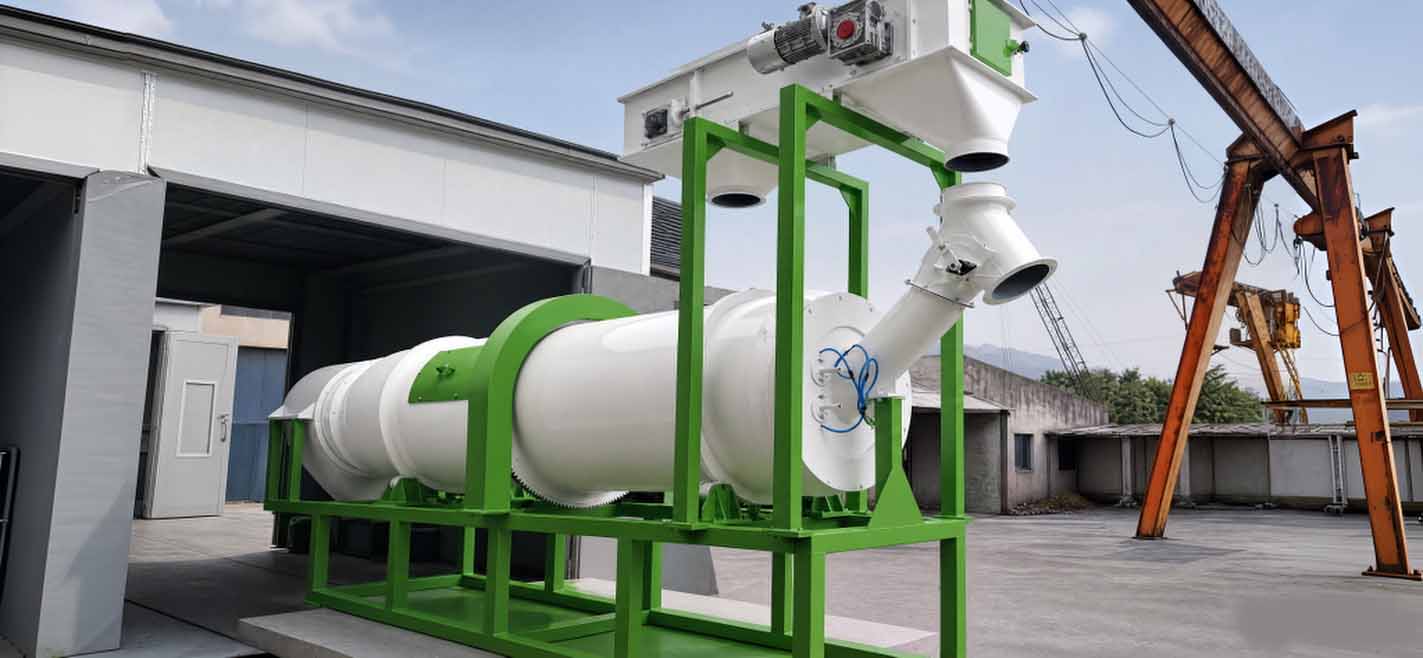
The ground sawdust enters a rotary dryer. Through full contact with hot air, moisture is rapidly evaporated, reducing the raw material’s moisture content to the ideal range for pelletizing (typically 10%–15%).
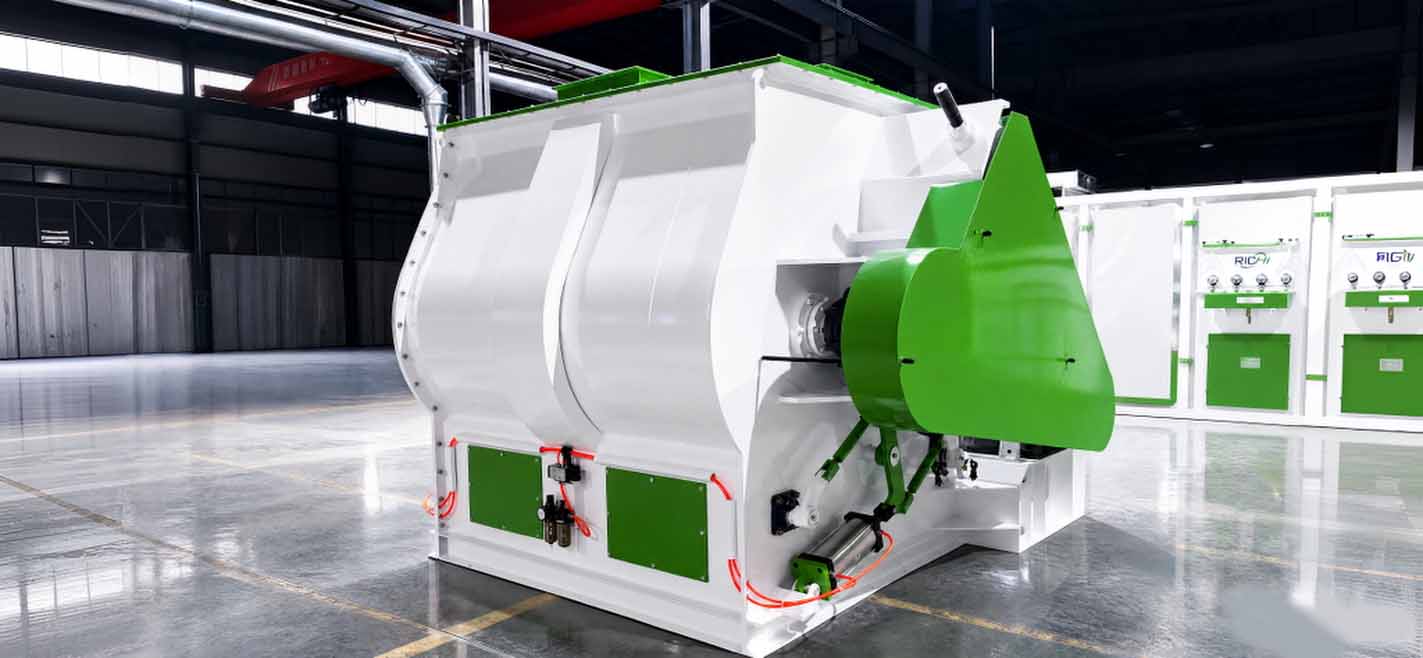
4. Mixing (Optional)
Before pelletizing, materials from different sources or tree species are evenly mixed. This ensures consistent moisture and fiber content, guaranteeing stable production of high-quality pellets.
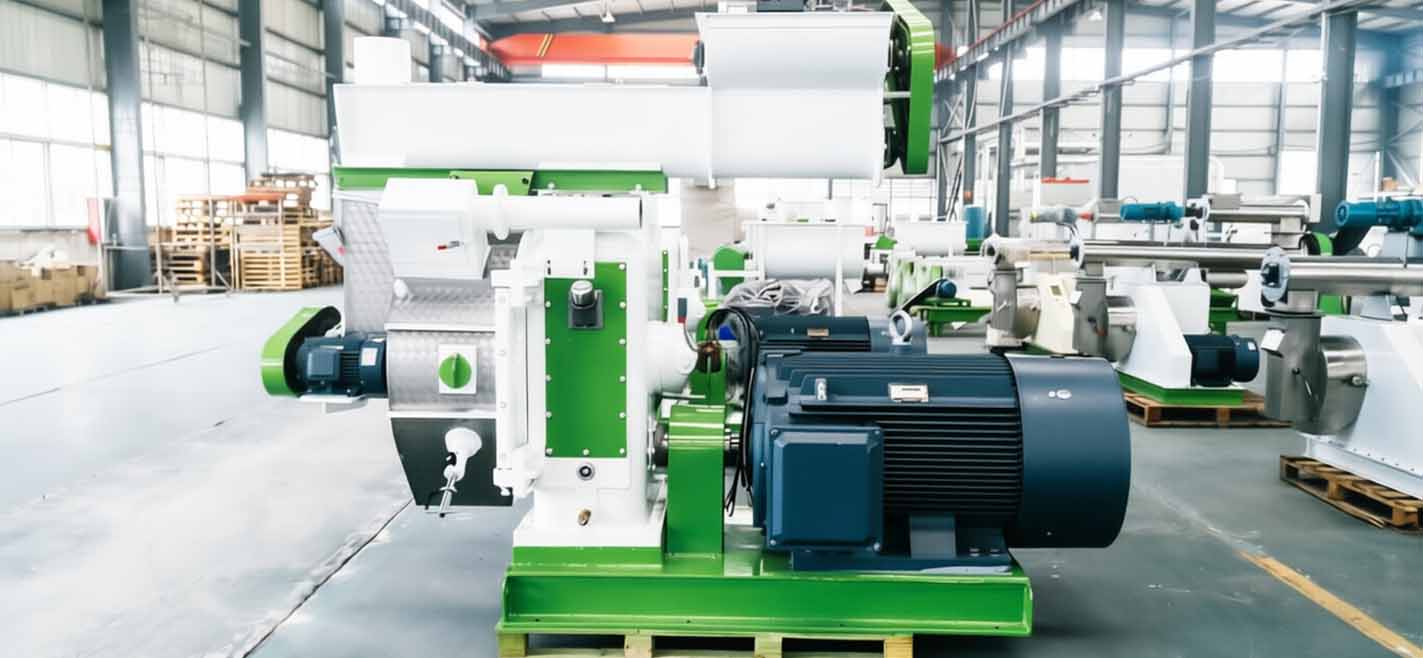
5. Pelletizing
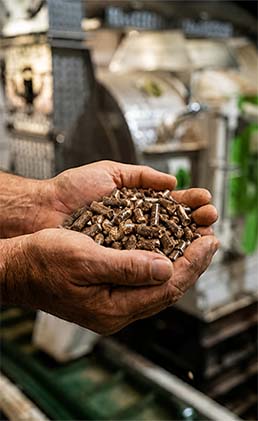
The processed materials enter the wood pellet machine. Under high pressure, they are formed into 4-12mm biomass fuel pellets. These pellets feature high density and strength to meet market needs.
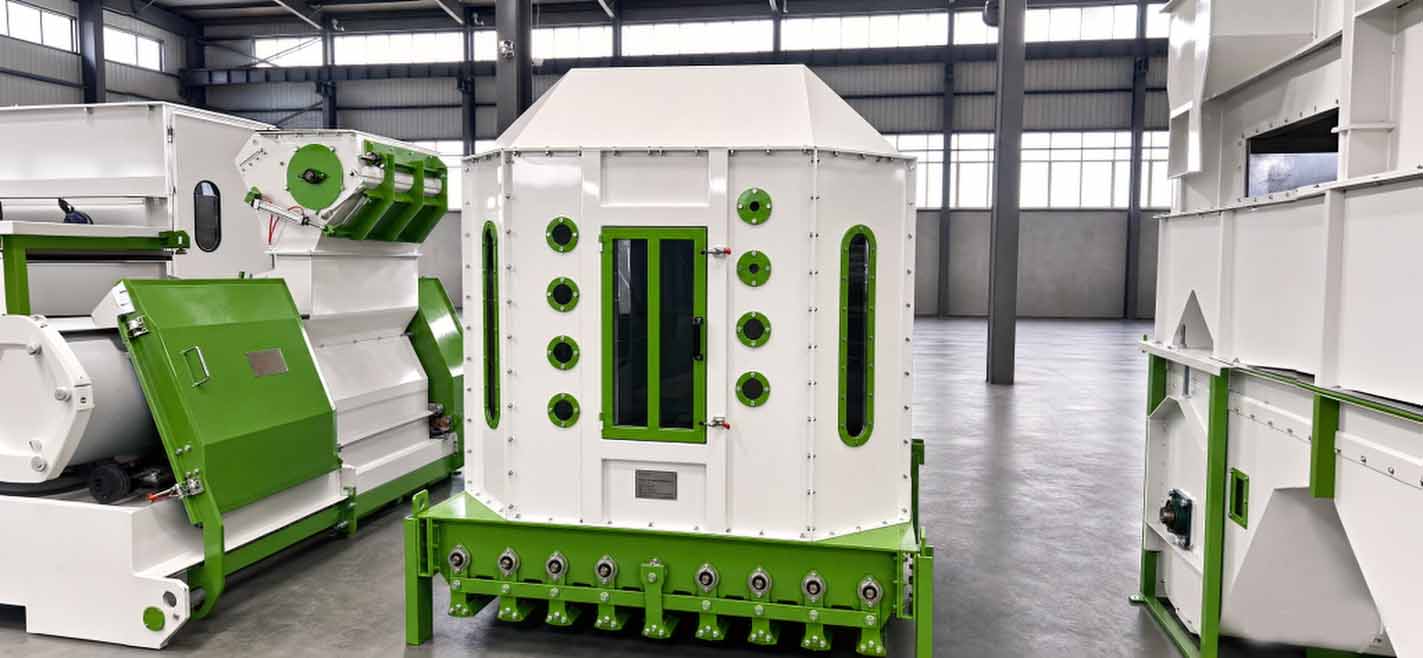
6. Cooling
Newly made pellets are very hot. A counter-flow cooling system quickly lowers their temperature and moisture, increasing hardness for easy storage and transport.
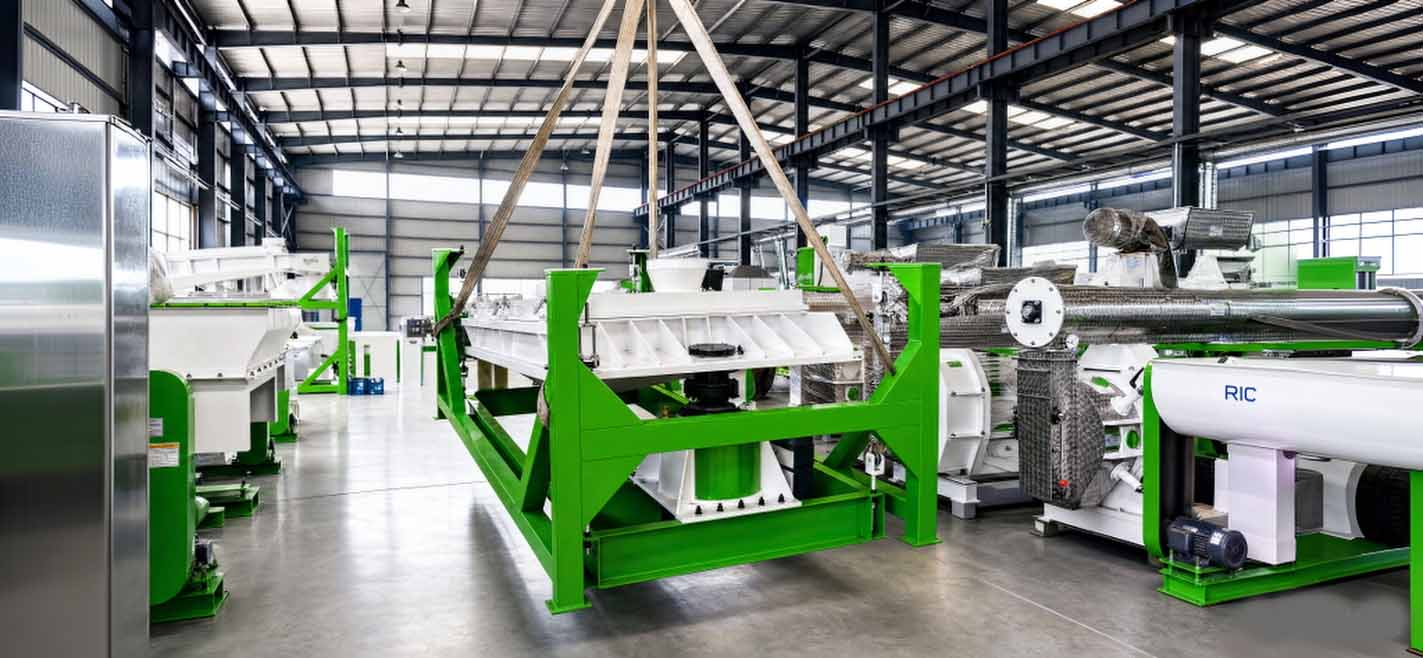
7. Screening
Cooled pellets pass through screening equipment to remove powder and fines, ensuring uniform size and superior product quality. The screened powder is returned to the pelletizing section for re-granulation, maximizing raw material utilization.
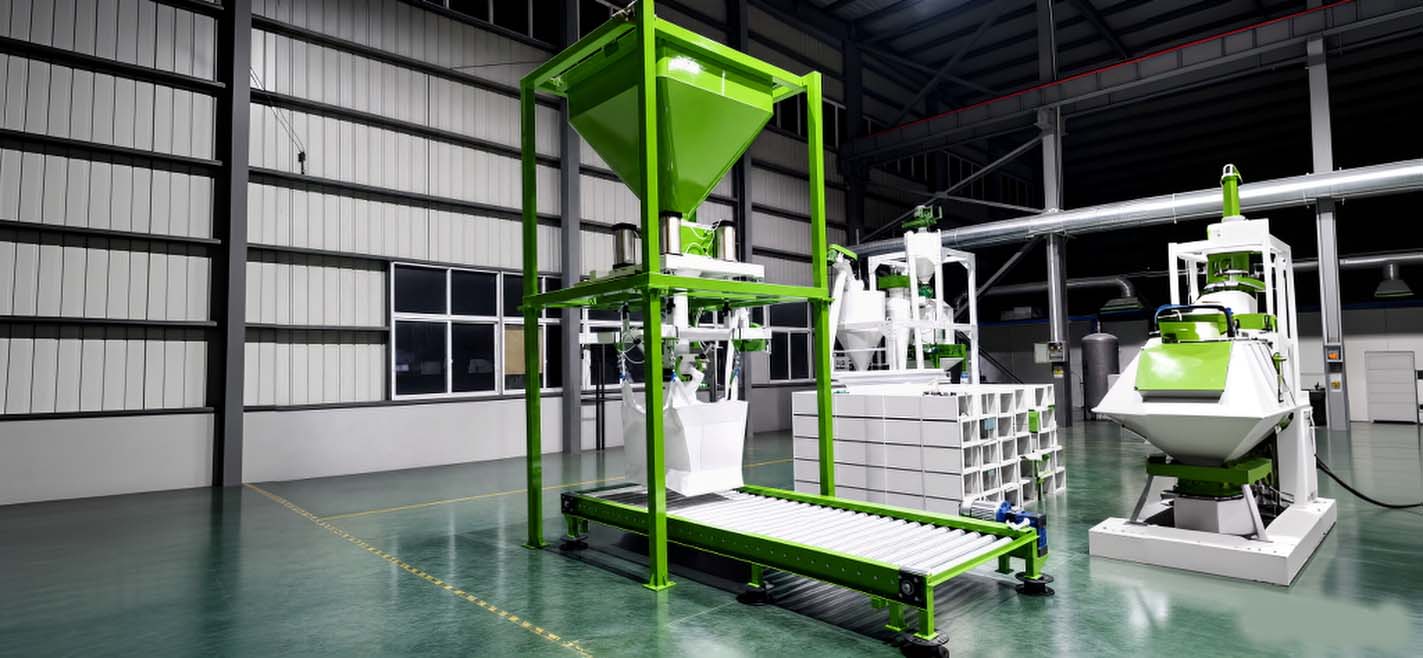
8. Packaging
Qualified pellets are sent to an automatic packaging system. Quantitative packaging is available based on customer needs, making warehousing, transport, and sales convenient.
Equipment Configuration for the U.S. Wood Pellet Plant
For this 10 t/h wood pellet production line in the U.S., all equipment was independently developed and manufactured by RICHI Machinery. We stand behind our quality with a robust guarantee and a lifetime after-sales service commitment.
Drum Wood Chipper
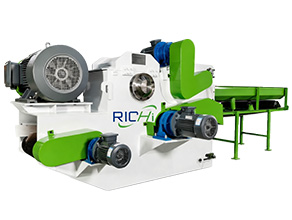
Main Motor Power : 75-200 kW
Processes logs, branches, wood offcuts and other large wood materials into uniformly sized wood chips.
Hammer Mill
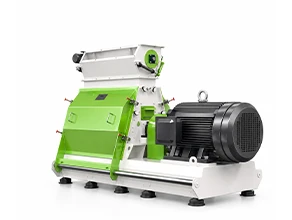
Feed type : Pellet/Powder/Crumbles
Pellet size : 1-12mm
Grinds wood chips into a uniform particle size suitable for pellet production.
Rotary Dryer
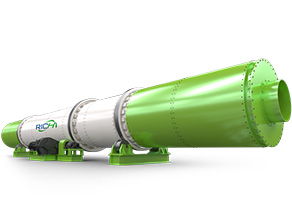
Dryer Length : 6-24 m
Rotation Speed : 3-12 rpm
Rapidly blends different raw materials to achieve uniform moisture content and fiber composition.
Twin Shaft Paddle Mixer
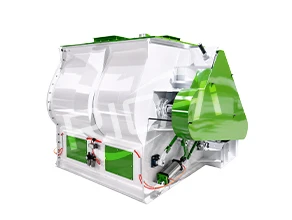
Power : 5.5-30kW
Effective volume: 0.5-4m³
Suitable for wood-based raw materials such as sawdust, wood chips, wood scraps, and wood processing offcuts. Widely used in biomass power generation, industrial boilers, and residential heating.
Wood Pellet Mill
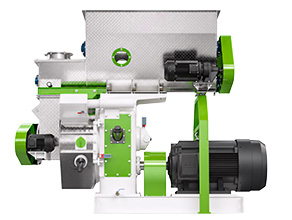
Power : 22-205 kW
Capacity : 0.2-4 T/H
Presses processed wood raw materials into high-density wood pellets.
Counter-flow Cooler
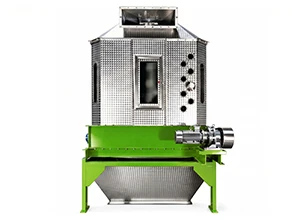
Cooling Time : 6-15 min
Capacity : 1-40 T/H
Ensures even cooling and superior pellet strength.
Rotary Grading Screener
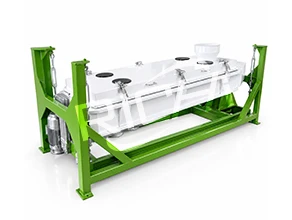
Capacity : 3-40 T/H
Power : 1.5-5.5 kW
Features multi-layer screens for continuous separation of different particle sizes.
Fully Automatic Packaging Scale
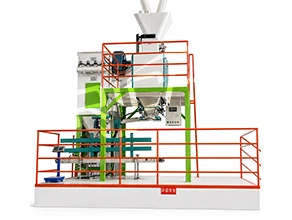
Packaging Speed : 2-8 min/bag
Packages materials, with sealing options: heat sealing, thread sewing, or hybrid sealing.
Complete Wood Pellet Production Line Delivery Process
From initial needs assessment to final operation, we provide a full-cycle, closed-loop service to ensure a worry-free experience, smooth project execution, and stable production.

1.Consultation & Confirmation
A successful project starts with understanding your needs. We clarify core details: herd size, target output, raw materials, facility dimensions, and budget. Based on this, our engineers provide a preliminary process plan and equipment list. Once confirmed, we sign the contract.
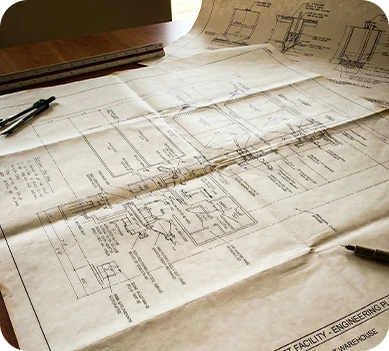
2.Drawings & Preparation
After the plan is finalized, we provide complete construction drawings covering equipment layout, piping, and foundation design. Clients can use these drawings for facility construction and site preparation.
Meanwhile, we begin equipment production, keeping you updated with photos. Before shipment, all machines are fully tested to meet parameters, then shipped with complete customs clearance documents.
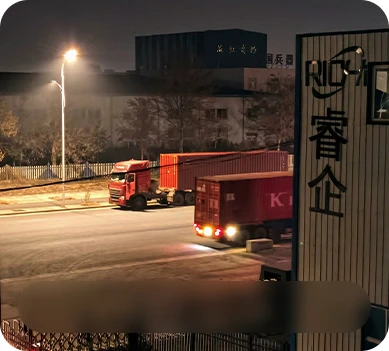
3.Production & Shipment
Upon arrival, clients can choose self-installation using our manuals or on-site support. We provide detailed installation guides for both options.
In this project, the client opted for our engineers’ on-site guidance.
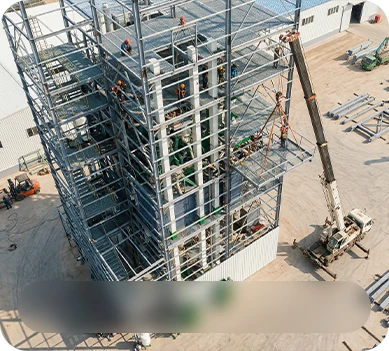
4.Installation & Commissioning
After installation, we guide the trial runs—both empty and with materials—to ensure pellet quality and stable operation. We also train operators on startup procedures, die changes, and basic troubleshooting. Once the trial run is smooth, we proceed with final acceptance.

5.Delivery & Lifetime Support
Delivery is not the end of our service. We set up a dedicated service group for instant communication. We offer free remote guidance during the warranty period, with a 48-hour on-site response.
Regular maintenance reminders and a long-term supply of original parts ensure you buy with confidence and use with peace of mind.
Customer Feedback and Project Performance
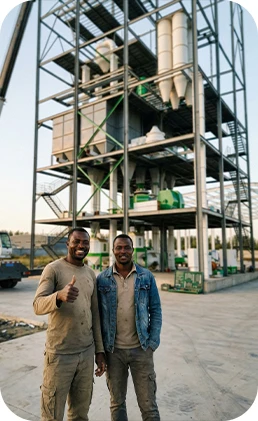
“RICHI offered us more than just equipment—they delivered complete project support. From solution design to installation and commissioning, communication was smooth throughout. Once the production line went into operation, both capacity and pellet quality met our expectations, and it handles different raw materials with ease. Overall, it has been a very smooth and successful partnership.”
— Project Manager, US Client
1.
Key Highlights from Customer Feedback
After project delivery, the client gave positive feedback on RICHI’s overall service. Beyond the equipment itself, the client noted that the initial solution design, on-site installation support, and follow-up technical support played a key role in the smooth commissioning of the project, making the entire construction process more efficient.
2.
Current Operation Status
The plant has now entered normal operation. The production line can stably process a variety of wood raw materials, and the produced wood pellets are mainly supplied to the local fuel market. As production experience accumulates, the client is also actively planning to expand future capacity and market reach.
Other Lucrative Pellet Business in the US
With abundant agricultural and forest resources, and a mature end-use market, several pellet businesses beyond wood pellets show great potential. They are ideal options for new projects or capacity expansion.
Animal Feed Pellets
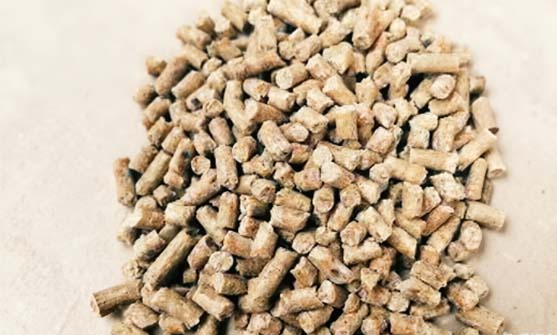
The US produces over 90 million tons of industrial feed annually. Its markets for cattle, swine, poultry, and pet food rank among the largest globally. In recent years, large farms and regional feed mills have preferred automated production lines to cut labor costs and improve formula consistency. Therefore, feed pellet processing remains a stable investment, whether for new plants or existing expansion.
Alfalfa & Forage Pellets
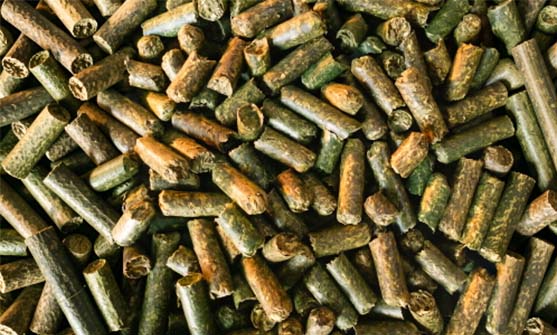
The US is one of the world’s top alfalfa producers, exporting large volumes of alfalfa pellets to Japan, South Korea, the UAE, and Saudi Arabia each year. For large ranches, pelleted forage is easier to store, transport, and feed mechanically, ensuring steady demand. The rich alfalfa resources in western states provide a solid raw material base for forage pellet processing.
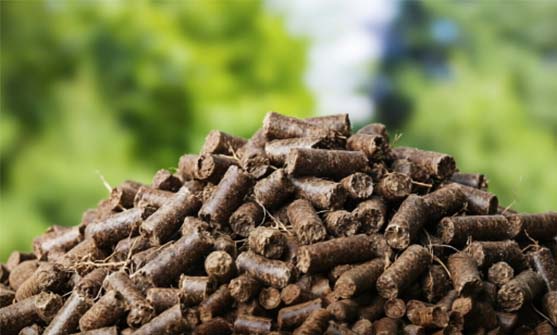
Organic Fertilizer Pellets
The US has a developed livestock industry, generating large amounts of cattle manure, chicken manure, and other organic waste annually. As more farms focus on soil improvement and nutrient cycling, organic fertilizer pellets are becoming high-value products. Compared to bulk organic fertilizer, pellets are easier to package, transport, and apply mechanically. They have stable market demand in horticulture, lawn care, and high-value cash crops.
RICHI Pellet Production Projects in Other Countries & Industries
With a global vision, we have crossed borders and industries. Backed by our solid experience in pellet production, we bring mature equipment, management expertise, and environmental solutions to clients around the world.
We also focus on applying pellet technology across different sectors. We have successfully executed benchmark projects in biomass energy, feed processing, organic fertilizer, and solid waste utilization. These projects prove our ability to adapt our processes to any industrial setting and deliver engineering excellence.
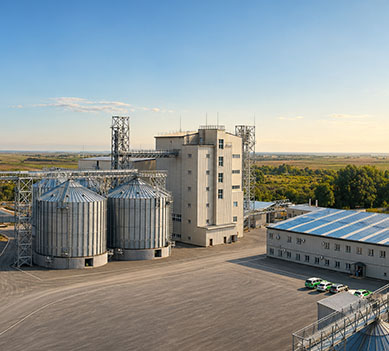

2-2.5 T/H Wood Sawdust Production Line in Australia
Region : Australia, Oceania
Application : Wood Pellet Production
Output : 2-2.5 T/H
Raw Materials: Pine & Eucalyptus Sawdust, Wood Shavings, Wood Offcuts, Bark, and Other Wood Residues
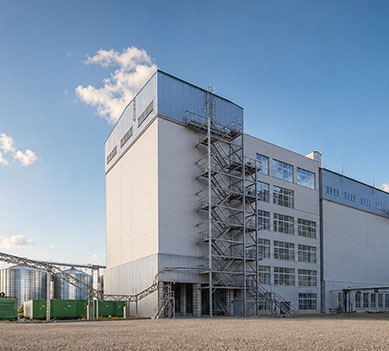

Poultry Feed Production Line In Algeria
Region : Africa, Algeria
Application : Poultry feed production
Output : 10-15 T/H
Product Type : pellet feed
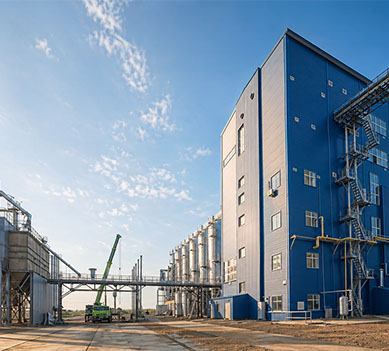

Bolivia 1 T/H Aquatic Feed Pellet Plant
Region : South America, Bolivia
Application : Floating & sinking freshwater fish feed production
Output : 1 T/H
Suitable fish species: Pacu, Tambaqui, Tilapia, Carp
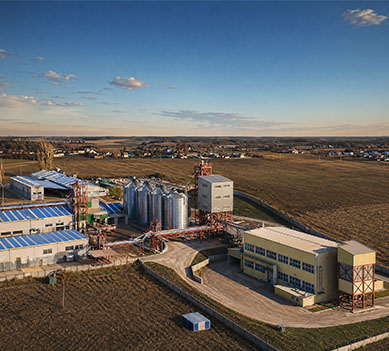

Canada 2T/H Turnkey Biomass Wood Pellet Plant
Region : North America, Canada
Application : Local industrial heating
Output : 2 T/H
Raw materials: Waste from sawmill processing
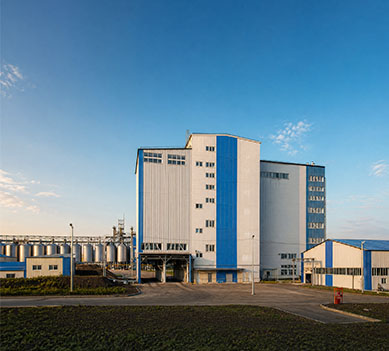

1 T/H Pet Food & Floating Fish Feed Production Line in Turkey
Region : Europe, Turkey
Application : Pet food & floating fish feed
Output : 1 T/H
Suitable fish species: Rainbow Trout, Sea Bass, Dogs, Cats
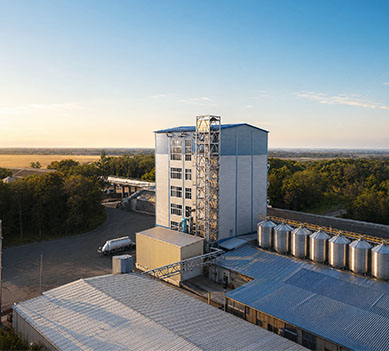

Colombia 3-4T/H Poultry Feed Pellet Production Plant
Region : North America, Colombia
Application : Poultry feed production
Output : 3-4 T/H
Product Type : Feed
Our Business Landscape: Pellet Solutions Across Industries
From wood to straw, forage to feed, and organic waste to eco-friendly cat litter, RICHI consistently turns diverse raw materials into high-value pellet products. Leveraging extensive cross-industry project experience, we deliver tailored pellet production solutions based on material properties, market demand, and investment goals.
Poultry Feed | Ruminant Feed | Swine Feed | Premix | Pelleted Feed
From single-feed production to multi-formula feed plants, suitable for feed mills and livestock farms of different sizes, with stable and efficient production.

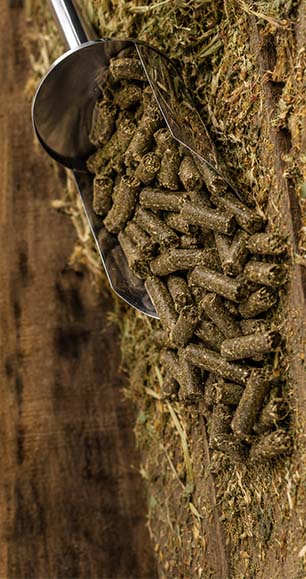
Wood Chips | Sawdust | Forage | EFB | Rice Husk | Straw | RDF | Waste Paper
Suitable for a wide range of biomass materials, providing pellet solutions for industrial fuel, power generation, and export markets.
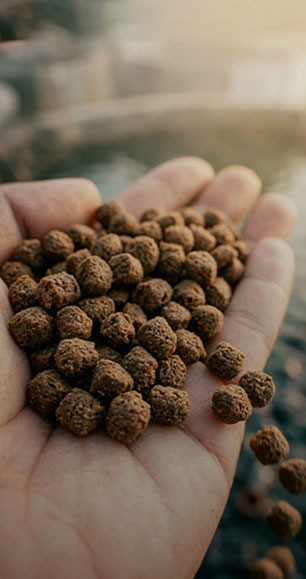
Floating Fish Feed | Sinking Fish Feed | Shrimp Feed | Pet Food | Extruded Feed
From aquafeed to premium pet food, with process and equipment solutions for different products and production requirements.
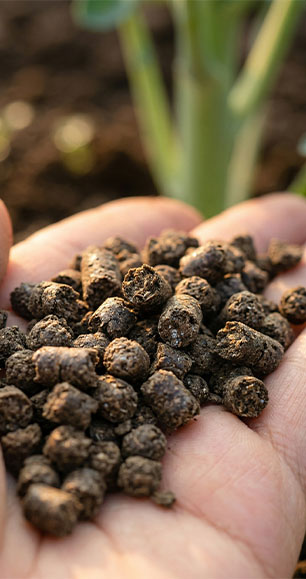
Chicken Manure | Cattle Manure | Pig Manure | Horse Manure | Sheep Manure | Sludge | Organic Waste
Pelletizing solutions for different organic materials, helping improve product value while making better use of organic waste.
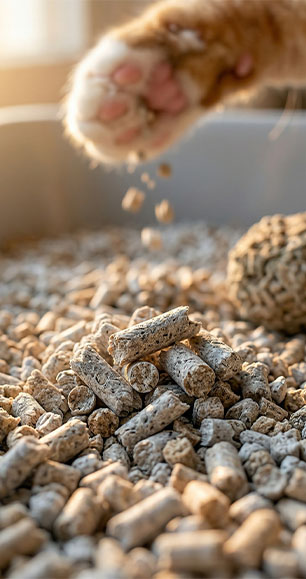
Tofu Cat Litter | Bentonite Cat Litter | Wood Cat Litter | Mixed Cat Litter
Support for different cat litter formulas and production processes, with customized solutions for various capacities and automation levels.
Start Your Pellet Project
Pellet production is a systematic process. Provide your raw materials and capacity needs, and we’ll create a customized solution with professional guidance for commercial production.

Address: South of intersection of Xingda Road & Hongyuan Road, Wuzhi, Jiaozuo City, Henan Province,China

Tel/WhatsApp: + 86 136 0866 8310

E-mail: enquiry@richimachinery.com



© HENAN RICHI MACHINERY CO., LTD 1995-2026 Product Line-Up / Privacy Policy
Contact Us
Please send your requirements, RICHI’s consultants will get back to you quickly.

