

Reliable Livestock Feed Pellet Machine for Modern Feed Mills
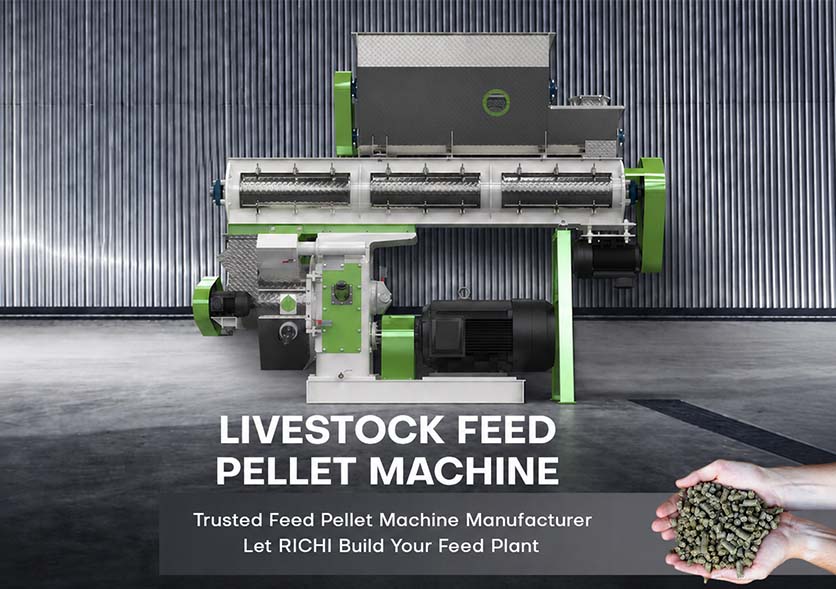
RICHI specializes in manufacturing livestock feed pellet machines. Utilizing advanced ring die technology, we process raw materials like corn, wheat, barley, soybean meal, and alfalfa into high-quality pellets.
Our production capacity ranges from 1 to 40 tons per hour, suitable for cattle, sheep, and pig feed. We also provide customized equipment and complete production solutions tailored to your specific formulas and factory conditions.
RICHI specializes in manufacturing livestock feed pellet machines. Utilizing advanced ring die technology, we process raw materials like corn, wheat, barley, soybean meal, and alfalfa into high-quality pellets.
Our production capacity ranges from 1 to 40 tons per hour, suitable for cattle, sheep, and pig feed. We also provide customized equipment and complete production solutions tailored to your specific formulas and factory conditions.
Livestock Feed Pellet Machine Applications & Selection Guide
In modern livestock feed production, the pellet machine plays a key role in turning mixed raw materials into finished pellets. Using ring die technology, it processes ingredients like corn, wheat, barley, soybean meal, and alfalfa into high-quality feed for cattle, sheep, and pigs.
For commercial feed mills and large-scale farms, the pellet machine is at the heart of the production line. It connects the front-end systems (grinding and mixing) with the back-end equipment (cooling, screening, and packaging), transforming formulated powder into premium pellets.
While the machine can operate alone, pellet quality depends on more than just the equipment. Factors like raw material quality, grinding fineness, mixing uniformity, conditioning, and die selection all impact the final result. Therefore, when choosing a machine, it is essential to match it with your production scale, raw materials, and target output to ensure stable, long-term operation.
Cấu trúc và thiết kế kỹ thuật của máy ép viên dạng vòng khuôn công nghiệp
RICHI industrial livestock feed pellet machine features a heavy-duty ring die system, specifically developed for continuous commercial feed production.
Toàn bộ hệ thống được thiết kế một cách có hệ thống nhằm đảm bảo hiệu suất ổn định trên ba khía cạnh chính: truyền mô-men xoắn, xử lý nguyên liệu và chất lượng viên nén.
Khuôn vòng & Buồng ép viên
Hệ thống cho ăn và chăm sóc
Hệ thống truyền động và hộp số
Thiết kế khung kết cấu và an toàn
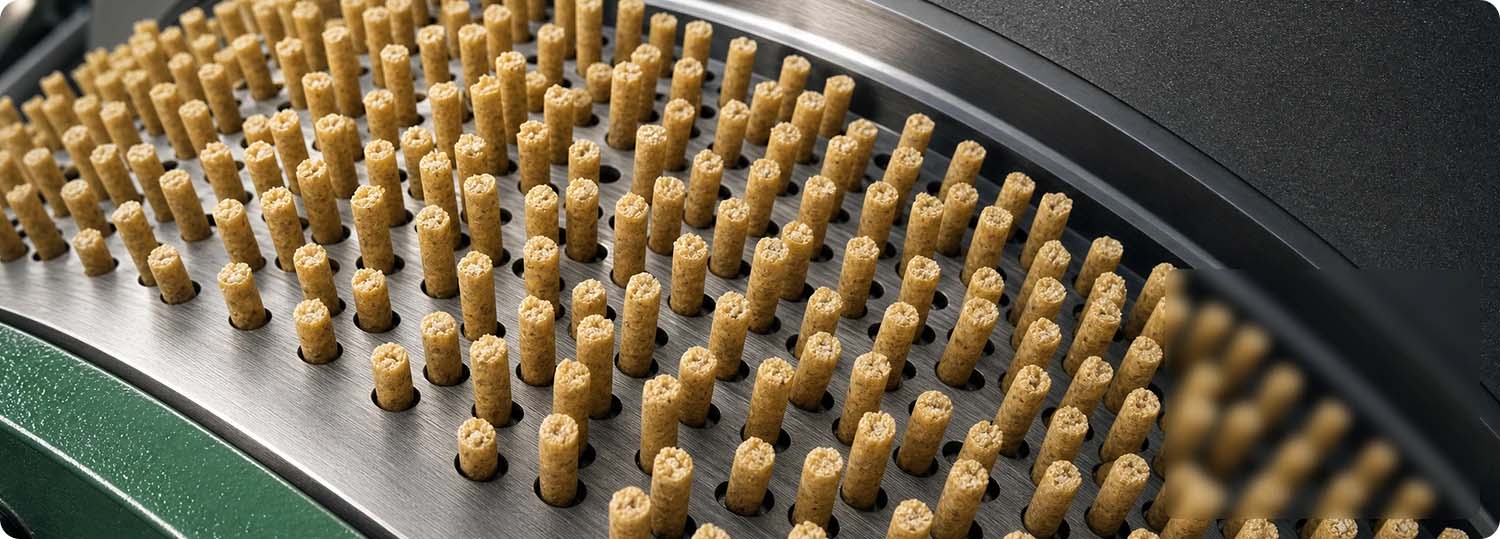
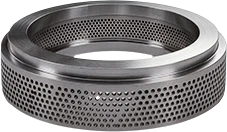
Khuôn vòng & Buồng ép viên
Tỷ lệ nén của khuôn vòng được điều chỉnh phù hợp với công thức nguyên liệu của quý khách. Các lỗ trên khuôn được gia công bằng máy CNC để đạt độ chính xác cao, đảm bảo viên nén đồng đều với tỷ lệ bột mịn thấp.
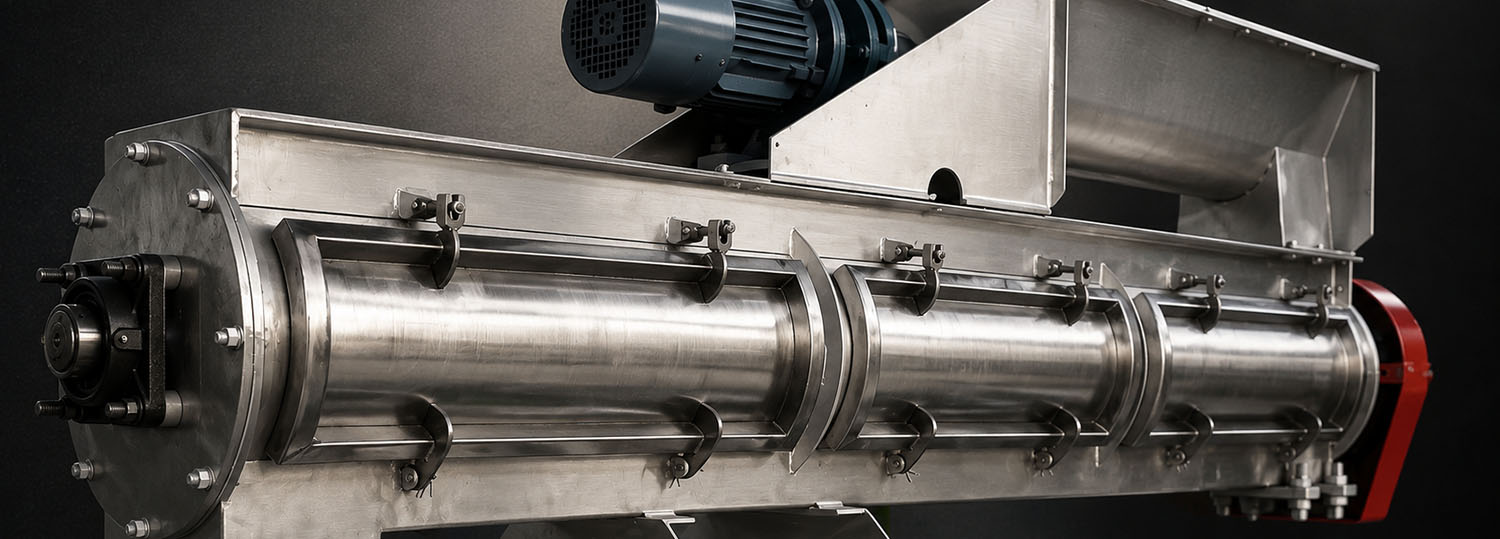
Hệ thống cho ăn và chăm sóc
Được trang bị bộ cấp liệu cưỡng bức tần số biến đổi, thiết bị này đảm bảo dòng nguyên liệu chảy liên tục và đều đặn vào bộ điều hòa bằng thép không gỉ. Điều này giúp ngăn ngừa tình trạng tắc nghẽn và ô nhiễm chéo do cặn nguyên liệu gây ra.
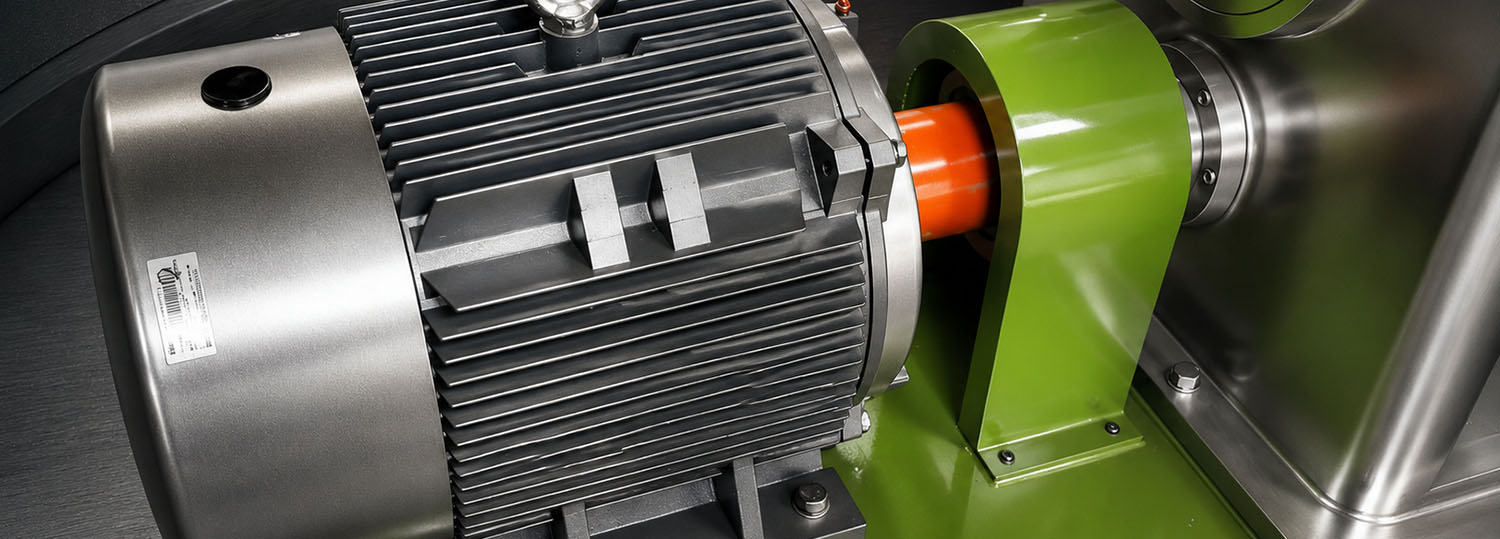
Hệ thống truyền động và hộp số
Sản phẩm được trang bị hộp số truyền động có độ chính xác cao. Hệ thống này mang lại hiệu suất mô-men xoắn cao mà không bị trượt, loại bỏ các vấn đề về mài mòn dây đai và đảm bảo độ ổn định vượt trội trong thời gian dài.
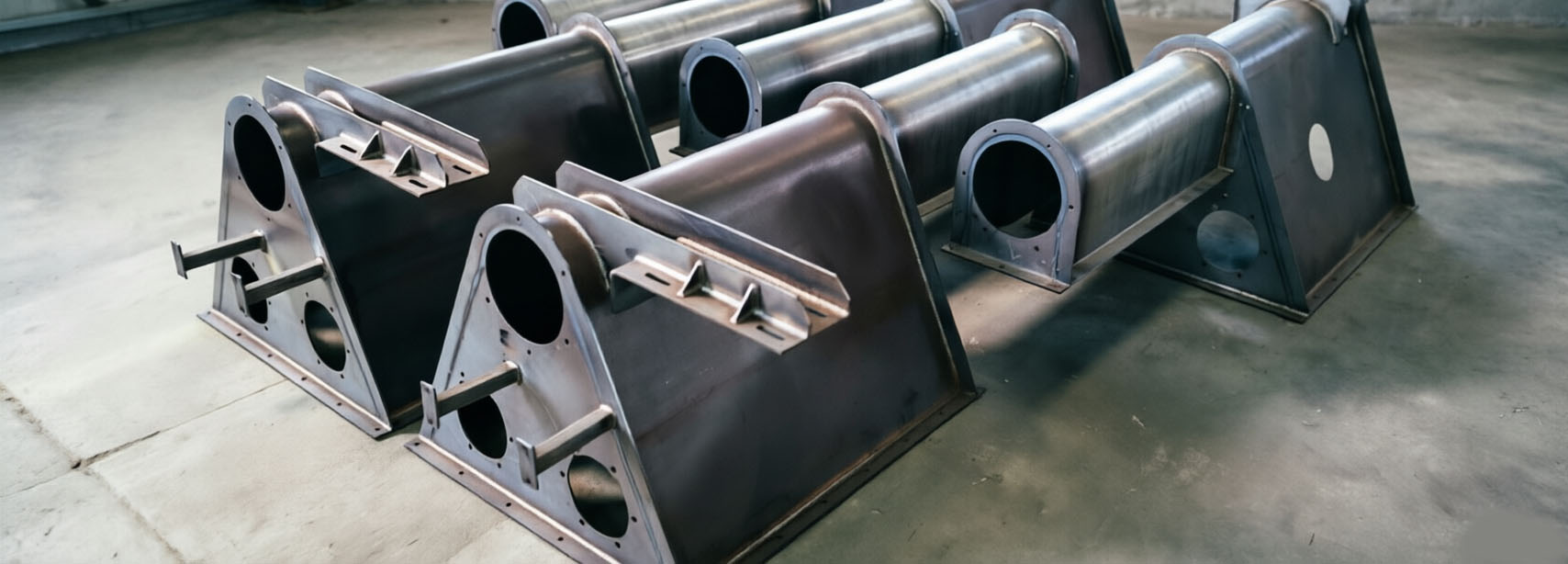
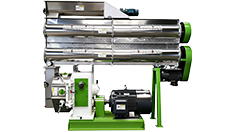
Thiết kế khung kết cấu và an toàn
Được chế tạo trên khung gầm bằng thép cường độ cao với các mối hàn liền mạch, cấu trúc chắc chắn này đảm bảo hoạt động ổn định ngay cả trong điều kiện rung lắc mạnh.
Thông số kỹ thuật và các thông số kỹ thuật của máy ép viên
Các thông số sau đây là công suất định mức của một dây chuyền sản xuất thức ăn chăn nuôi hoàn chỉnh. Công suất thực tế phụ thuộc vào quá trình chuẩn bị nguyên liệu và độ ổn định của quá trình trộn. Khi lựa chọn, cần tính đến một biên độ an toàn dựa trên đặc tính của nguyên liệu và điều kiện sản xuất.
Nhà máy sản xuất viên thức ăn chăn nuôi
| Mẫu | SZLH250 | SZLH320 | SZLH350 | SZLH420 | SZLH508 | SZLH558 | SZLH678 | SZLH768 |
| Công suất động cơ chính (kW) | 22 | 37 | 55 | 110 | 160 | 185 | 250 | 315 |
| Công suất máy cấp liệu (kW) | 1.1 | 1.5 | 1.5 | 1.5 | 1.5 | 1.5 | 1.5 | 2.2 |
| Công suất bộ điều chế (kW) | 1.5 | 4 | 4 | 7.5 | 7.5 | 11 | 11 | 11 |
| Đường kính trong của khuôn vòng (mm) | 250 | 320 | 350 | 420 | 508 | 558 | 673 | 762 |
| Đường kính viên nén thành phẩm (mm) | 2~12 | |||||||
| Công suất (tấn/giờ) | 1.0-1.5 | 3-4 | 5-6 | 10-12 | 15-16 | 20-22 | 30-33 | 38-40 |
| Lưu ý: Thông số kỹ thuật có thể thay đổi tùy theo báo giá cuối cùng. RICHI cung cấp dịch vụ thiết kế và sản xuất theo yêu cầu chuyên nghiệp. RICHI giữ quyền giải thích cuối cùng. | ||||||||
Livestock Feed Pellet Size & Die Hole Configuration Reference
| Livestock Type | Giai đoạn tăng trưởng | Đường kính viên nén khuyến nghị (mm) | Recommended Die Hole Diameter (mm) | Ghi chú |
| Fattening Pigs | Piglets (Weaning–25 kg) | 2,0–3,0 | 2,0–3,0 | Smaller pellets are recommended for young pigs to improve feed intake and adaptation. |
| Growing Stage (25–60 kg) | 3,0–4,0 | 3,0–4,0 | Suitable pellet size for improving feed intake and growth performance. | |
| Finishing Stage (60 kg–Market Weight) | 4.0–5.0 | 4.0–5.0 | Larger pellets help reduce feed loss and improve feeding efficiency. | |
| Breeding Sows | Replacement Gilts | 3,0–4,0 | 3,0–4,0 | Medium-sized pellets help maintain normal feed intake. |
| Gestation & Lactation Period | 4.0–5.0 | 4.0–5.0 | Suitable for high feed intake requirements during reproductive stages. | |
| Beef Cattle | Calves | 3.0–5.0 | 3.0–5.0 | Medium-sized pellets support early feeding and digestion. |
| Fattening Cattle | 6.0–8.0 | 6.0–8.0 | Larger pellets are suitable for cattle with higher feed intake and help reduce waste. | |
| Adult Cattle | 8.0–10.0 | 8.0–10.0 | Suitable for diets containing higher levels of forage and fiber. | |
| Dairy Cattle | Calves | 3.0–5.0 | 3.0–5.0 | Pellet size can be adjusted according to concentrate feed requirements. |
| Lactating Cows | 6.0–8.0 | 6.0–8.0 | Supports high feed intake and nutritional supply. | |
| Meat Sheep | Lambs | 3,0–4,0 | 3,0–4,0 | Smaller pellets are suitable for young sheep. |
| Fattening Sheep | 4,0–6,0 | 4,0–6,0 | Medium to larger pellets improve feeding efficiency during fattening. | |
| Adult Sheep | 5,0–8,0 | 5,0–8,0 | Suitable for diets combining concentrate and forage materials. | |
| Horses | Young Horses | 3.0–5.0 | 3.0–5.0 | Avoid oversized pellets to improve feeding acceptance. |
| Adult Horses | 6.0–8.0 | 6.0–8.0 | Suitable for grain and forage-based pellet feeds. | |
| Rabbits | Young Rabbits | 2,0–3,0 | 2,0–3,0 | Smaller pellets are more suitable for young rabbits. |
| Adult Rabbits | 3.0–5.0 | 3.0–5.0 | Suitable for daily pellet feeding requirements. |
Performance Advantages in Commercial Livestock Feed Production
For feed mills, pellet mills face the rigorous challenge of continuous production and long-term operation. Stable output, consistent pellet quality, low material waste, and easy maintenance are the key factors determining equipment performance.
RICHI livestock feed making machine are engineered around these practical needs, providing stable and reliable pelletizing solutions for cattle, sheep, swine, and other livestock feed.
1.
Stable Production to Meet Long-Term Demand
Feed production is not an occasional task; it requires meeting the daily demands of farms and the market. A stable pellet mill ensures uninterrupted production, minimizes operational adjustments caused by output fluctuations, and guarantees a reliable daily feed supply.
2.
Consistent Pellet Quality for Better Feed Efficiency
Stable pellet quality across different batches is the foundation for building long-term customer trust. Through advanced pelletizing technology, our equipment produces uniform, dense pellets, significantly reducing fines (dust) during transportation and storage.
3.
Versatility to Handle Various Formulas
Livestock feed production often requires formula adjustments based on animal growth stages, local raw materials, and market trends.
Our machine processes a wide range of raw materials—including corn, wheat, soybean meal, and alfalfa. With flexible die configurations, it meets the diverse production needs of different feed types.
4.
Built for Continuous Operation, Minimizing Downtime
For feed mills, equipment downtime not only increases maintenance costs but also disrupts on-time delivery.
The reliable structural design and wear-resistant components of RICHI pellet mills are built for continuous, long-term operation. They reduce maintenance frequency, ensuring your production schedule remains stable.

Livestock Feed Pelletizer Solutions for Different Production Scales
Whether you are producing feed for your own cattle, sheep, pigs, and other livestock, or planning to start a commercial feed production business, different feed production needs require different equipment capacities, automation levels, and configurations.
RICHI provides livestock feed pellet machine solutions from on-farm feed production to commercial feed manufacturing, based on your farm size, daily feed demand, production purpose, and future expansion plans, helping you choose the right equipment configuration for your needs.
1. Farm Feed Production Solution (≥8 t/day)
2. Commercial Feed Production Solution
3. Industrial Feed Manufacturing Solution
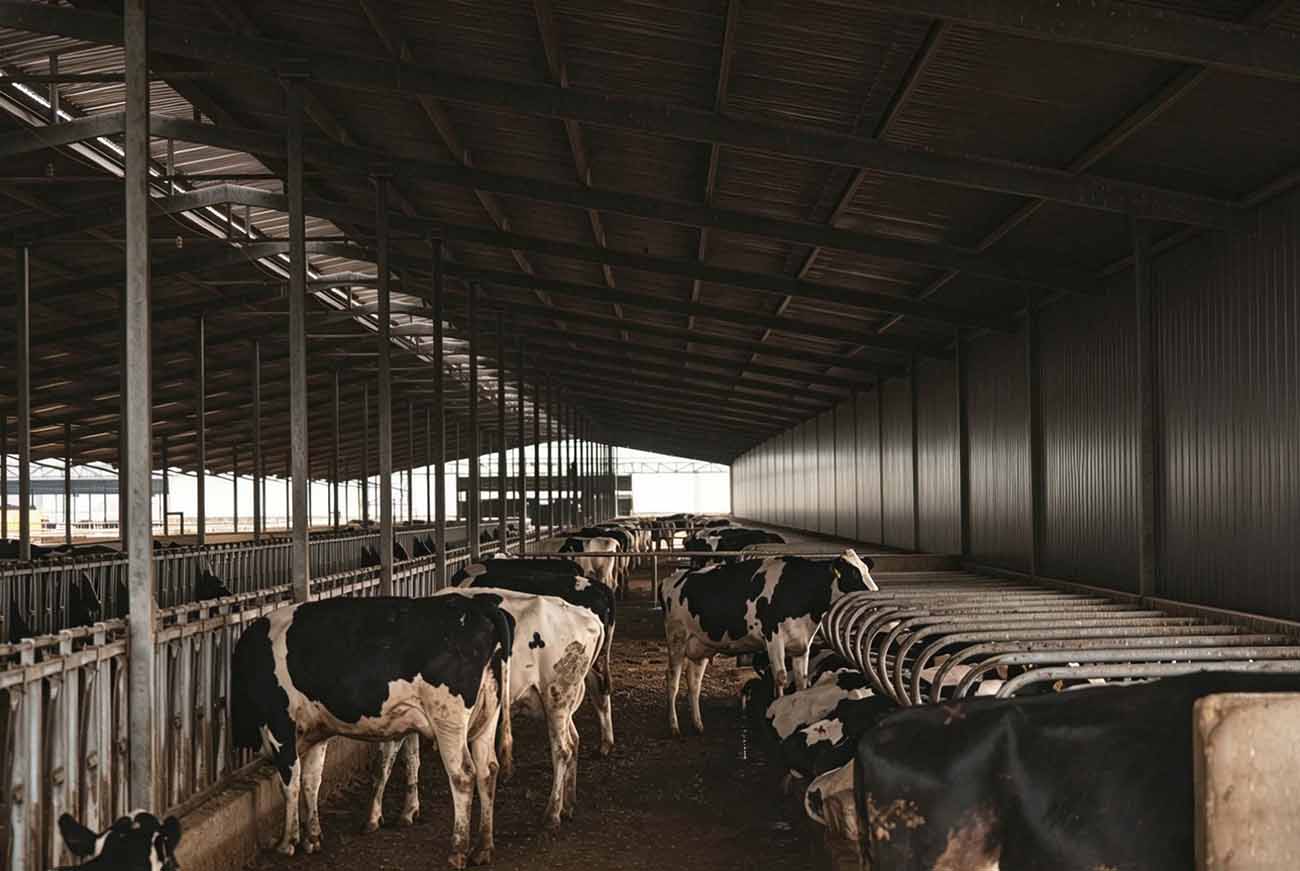
1. Farm Feed Production Solution
Production Requirements:
Daily Feed Requirement Reference:
- ≥8 tons/day → Suitable for RICHI industrial livestock feed pellet machine solutions
- <8 tons/day → Not within RICHI’s target service range
Recommended Capacity:
1–2 T/H (configured according to daily feed demand)
Typical Equipment Configuration:
Feed crusher + Feed mixer + Livestock feed mill machine + Cooling & screening equipment (optional)
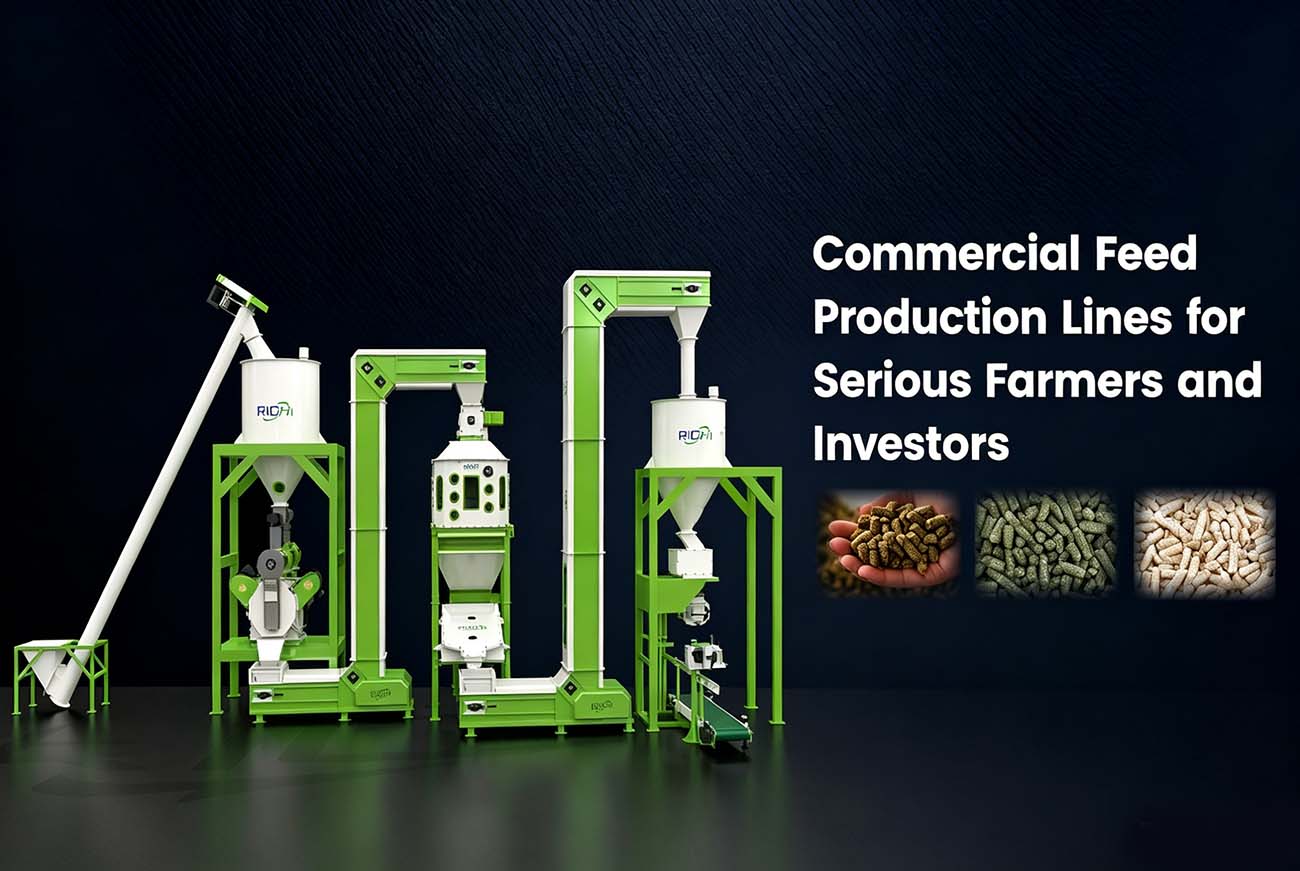
2. Commercial Feed Production Solution
Production Requirements Features:
- Balances production efficiency with investment costs, suitable for stable commercial operations;
- Supports various livestock feed formulas, including cattle feed, sheep feed, and pig feed;
- Allows flexible product adjustment according to market demand;
- Suitable for continuous production and bulk feed supply.
Recommended Capacity:
3–5 T/H
Typical Equipment Configuration:
Raw material grinding system + Mixing system + Pelletizing system + Cooling system + Packing system
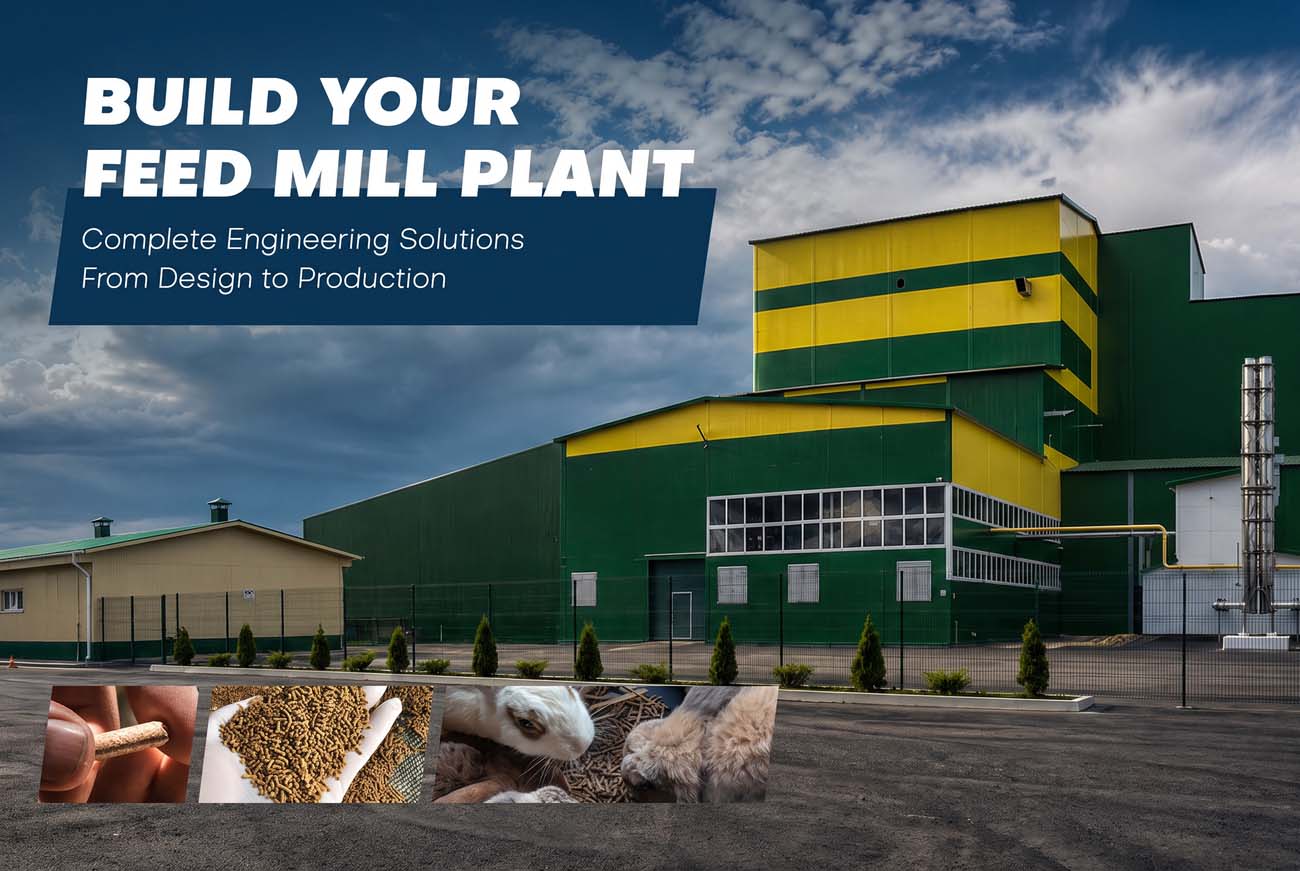
3. Industrial Feed Manufacturing Solution
Production Requirements Features :
- Meets high-volume feed production requirements;
- Supports year-round continuous operation;
- Can be equipped with automatic control systems to improve production efficiency;
- Allows future factory expansion according to increasing production needs.
Recommended Capacity:
8 T/H and above
Typical Equipment Configuration:
Complete livestock feed production line, including:
Raw material receiving system + Grinding system + Batching & mixing system + Pelletizing system + Cooling & screening system + Packing system + Automatic control system
From Pellet Machine to Complete Livestock Feed Plant
The pellet machine is the core of the feed line, but its performance relies on matching upstream and downstream systems. Process integration and capacity balance across all stages determine the line’s efficiency and final product quality. Integrating pelleting into a full-process design is key to stable production and cost optimization. (Nhấp vào để lật và xem chi tiết.)
01.
Nguyên liệu thô
Xử lý
Sau khi nhận được, nguyên liệu thô sẽ được sàng lọc để loại bỏ các tạp chất thô. Nguyên liệu đã được làm sạch sẽ được lưu trữ trong các silo chuyên dụng có dán nhãn rõ ràng.
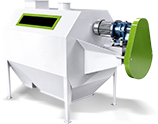
Máy làm sạch trống quay
Loại bỏ sỏi, cát và các tạp chất cồng kềnh khỏi vật liệu dạng hạt.
Công suất
15–50 tấn/giờ
Tốc độ trống
12–21 vòng/phút
02.
Nghiền nguyên liệu thô và kiểm soát kích thước viên
Độ mịn của bột có thể điều chỉnh để phù hợp với các giống gia cầm và các giai đoạn phát triển khác nhau.
Sau khi nghiền, nguyên liệu được vận chuyển bằng cơ chế cơ khí đến thùng trộn, sẵn sàng để sử dụng.
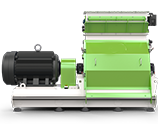
Máy nghiền búa
Xay nhuyễn nguyên liệu (kích thước ≤5cm) thành bột; kích thước lưới sàng có thể điều chỉnh theo yêu cầu.
Công suất
3–50 tấn/giờ
Kích thước hạt
0,5 – 20 mm
03.
Trộn theo mẻ & Trộn
Sử dụng cân điện tử được điều khiển bởi bộ điều khiển logic lập trình (PLC). Sau khi cân xong, nguyên liệu được đưa vào máy trộn.
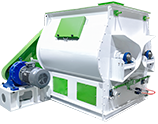
Máy trộn cánh khuấy hai trục
Được thiết kế để trộn bột, hạt, mảnh, cục, vật liệu có hình dạng không đều và các chất có độ nhớt cao.
Chất liệu
Thép carbon, thép không gỉ
Công suất lô
250–2000 kg/tấn
04.
Chế biến & Ép viên
Hỗn hợp bột được xử lý bằng hơi nước nhiệt độ cao. Tiếp theo, hỗn hợp được đưa vào máy ép viên khuôn vòng để tạo viên. Kích thước lỗ khuôn có thể điều chỉnh được.
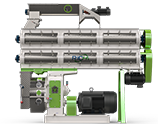
Livestock Feed Pellet Mill
Nén bột thành những viên nén chắc chắn và bền bỉ một cách hiệu quả.
Năng lượng
22–315 kW
Công suất
1–40 tấn/giờ
05.
Làm mát
Các viên nén nóng và có độ ẩm cao được làm mát và khử ẩm để đạt đến nhiệt độ phòng và mức độ ẩm an toàn cho việc bảo quản.
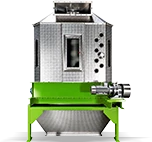
Bộ làm mát ngược dòng
Làm mát các viên nén nhiệt độ cao xuống nhiệt độ phòng.
Thời gian làm mát
6–15 phút
Công suất
1–40 tấn/giờ
06.
Chiếu phim
Các viên nén đã được làm mát được phân loại qua một máy rây rung để loại bỏ bột và các hạt mịn.
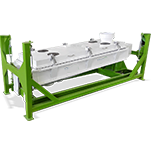
Máy sàng phân loại quay
Phân loại vật liệu dạng hạt thành các sản phẩm thành phẩm có kích thước lớn, trung bình và nhỏ.
Công suất
3–40 tấn/giờ
Năng lượng
1,5–5,5 kW
07.
Hệ thống đóng gói và điều khiển tự động
Cân điện tử cho phép đóng gói theo yêu cầu (túi 10kg–50kg hoặc túi 1 tấn). Dây chuyền sản xuất hoàn toàn tự động với tùy chọn sử dụng robot. Chế độ điều khiển: Thủ công, bán tự động hoặc hoàn toàn tự động.
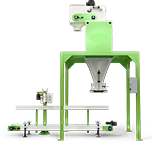
Cân đóng gói hoàn toàn tự động
Vật liệu đóng gói, với các tùy chọn niêm phong: hàn nhiệt, khâu chỉ hoặc niêm phong kết hợp.
Tốc độ đóng gói
2–8 phút/túi
Các dự án thiết kế nhà máy sản xuất thức ăn chăn nuôi
Với mục tiêu phục vụ thị trường toàn cầu, chúng tôi hỗ trợ các tập đoàn chăn nuôi quy mô lớn và các doanh nghiệp sản xuất thức ăn chăn nuôi. Các dự án dưới đây minh họa các giải pháp dây chuyền sản xuất thức ăn chăn nuôi trọn gói của chúng tôi, bao gồm nhiều quy mô và loại hình khác nhau. Mỗi giải pháp đều đã được kiểm chứng qua quá trình sản xuất quy mô lớn.
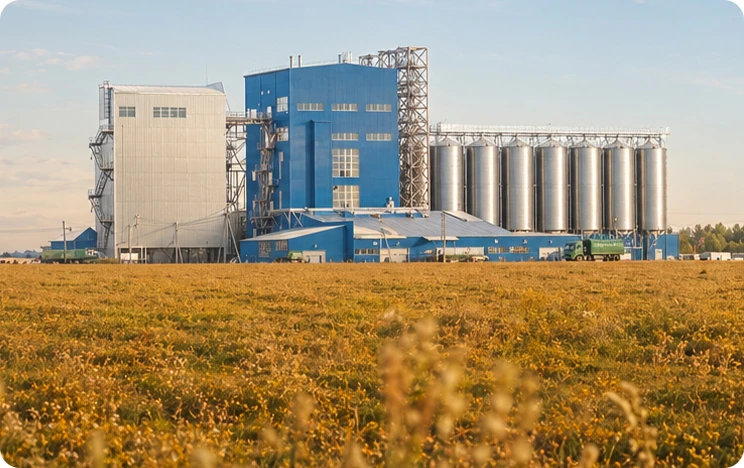
10 Dây chuyền sản xuất thức ăn chăn nuôi gia cầm tại Algeria
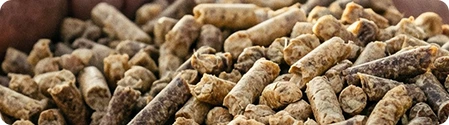
Khu vực : Châu Phi
Ứng dụng : dây chuyền sản xuất thức ăn chăn nuôi gia cầm
Kết quả : 10 T/H
Loại sản phẩm : nguồn cấp dữ liệu
Dây chuyền sản xuất thức ăn viên hoàn chỉnh cho gà công suất 3-5 tấn/giờ tại Zimbabwe
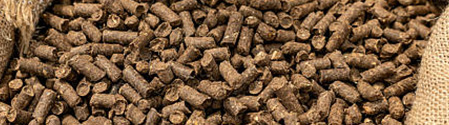
Khu vực : Châu Phi
Ứng dụng : dây chuyền sản xuất thức ăn gia cầm
Kết quả : 10–15 tấn/giờ
Loại sản phẩm : thức ăn viên
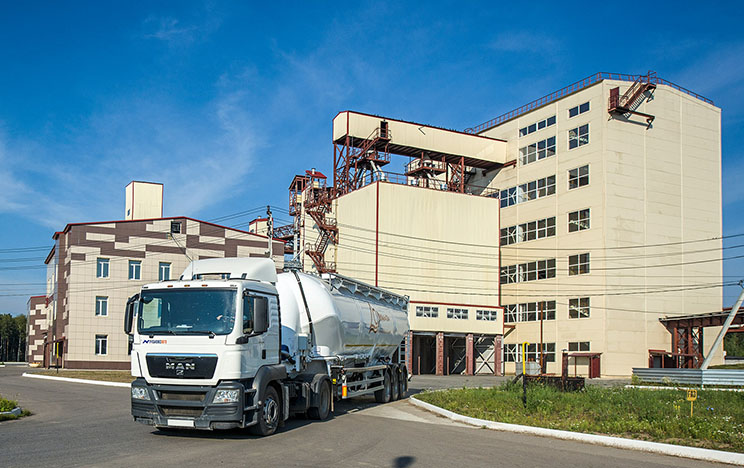
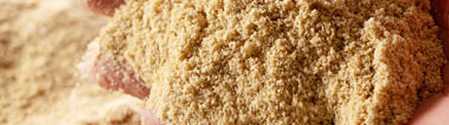
Dây chuyền sản xuất thức ăn chăn nuôi dạng bột công suất 5 tấn/giờ Kenya
Khu vực : Châu Phi
Ứng dụng : dây chuyền sản xuất thức ăn chăn nuôi
Kết quả : 5 tấn/giờ
Loại sản phẩm : thức ăn dạng bột
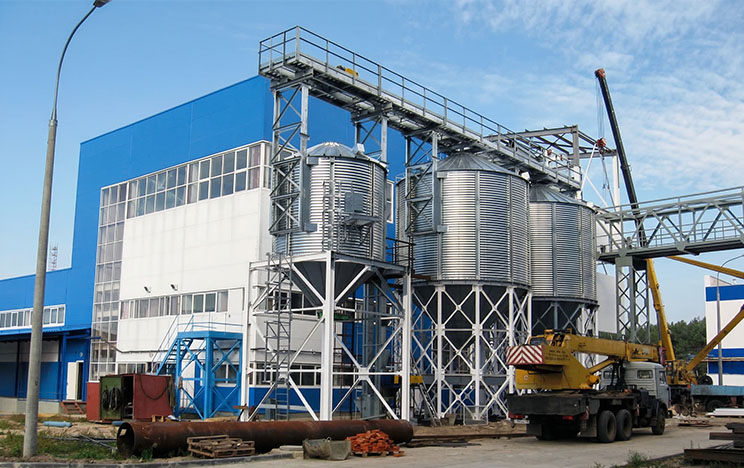
Nhà máy sản xuất thức ăn chăn nuôi công suất 5-6 tấn/giờ Ethiopia
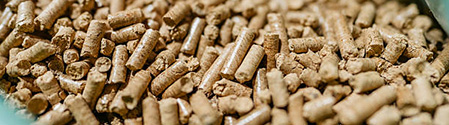
Khu vực : Châu Phi
Ứng dụng : dây chuyền sản xuất thức ăn chăn nuôi
Kết quả : 5–6 tấn/giờ
Loại sản phẩm : thức ăn viên
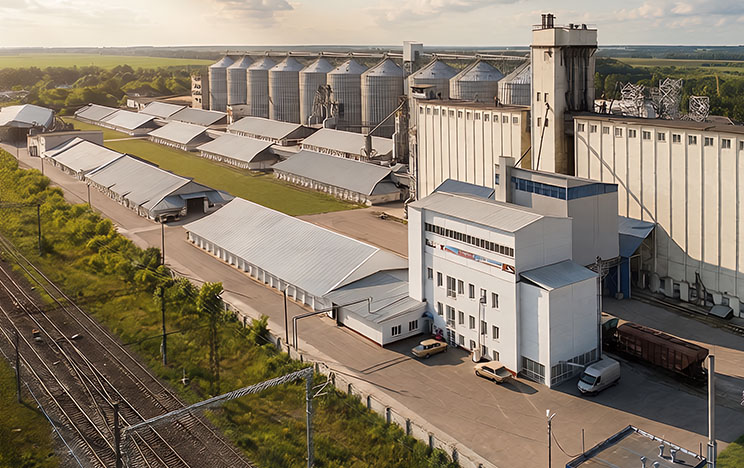
Livestock Feed Production Questions Answered
Tìm câu trả lời chuyên môn cho các câu hỏi thường gặp, bao quát các quy trình chính và những yếu tố quan trọng cần lưu ý trong sản xuất thức ăn chăn nuôi.
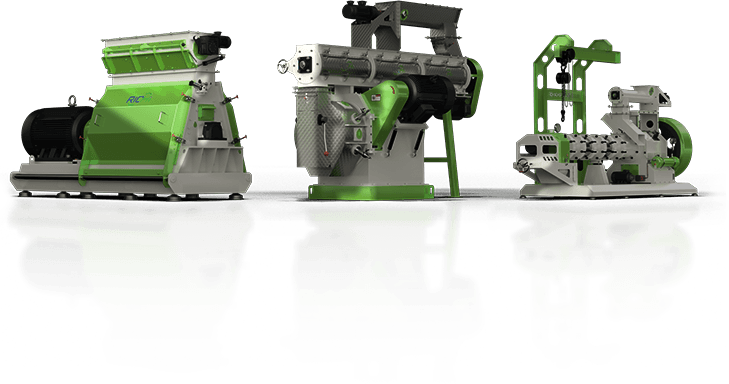
1. What is a livestock feed pellet machine? What feed can it produce?
The livestock feed pellet machine is equipment that presses crushed and mixed raw materials into pellets. It is commonly used for producing feed for cattle, sheep, and pigs.
2. What raw materials can the feed pellet machine process?
This equipment is suitable for a wide range of livestock feed raw materials, including grains, protein sources, and fiber materials. Examples include corn, wheat, barley, soybean meal, alfalfa, and various grasses.
Since fiber content, moisture, and formula ratios affect pellet quality, the machine configuration needs to be selected based on the specific raw materials.
3. What production capacity do I need for a feed pellet machine?
The capacity depends on your daily feed demand, production hours, and usage scenario. RICHI offers feed pelletizers and pelleting equipment ranging from 1 to 40 tons per hour (T/H). We provide solutions for farm self-use, small and medium-sized feed processing, and continuous production for commercial feed mills.
4. Can this machine produce feed for cattle, sheep, and pigs?
Yes. When producing feed for cattle, sheep, and pigs, you can choose the appropriate pellet specifications based on the animal species, growth stage, and feeding requirements.
For example, cattle and sheep feed usually requires larger diameter pellets, while pig feed size varies by stage. By adjusting the ring die configuration, the machine can be used as a cattle feed pellet machine or a pig feed pellet machine.
5. Can the size of the feed pellets be adjusted?
Yes. By changing the ring die with different hole sizes, the machine can produce various pellet sizes. RICHI livestock feed pellet machines support pellet diameters ranging from 2 to 12 mm, allowing you to adjust according to the animal type, age, and feed purpose.
6. Is this equipment suitable for farms or feed mills?
This equipment is primarily suitable for large-scale farms producing feed for their own use and for commercial feed mills.
- For Farm Self-use: It is recommended for daily feed needs of 8 tons or more. If the demand is lower, the investment and running costs may not match, and other production methods might be more suitable.
- For Commercial Feed Mills: Different models can be configured according to target output to produce pellet feed for cattle, sheep, pigs, etc.
Lưu ý: The machine requires raw materials to be in a suitable state for processing. If using whole corn, wheat, or pasture grass, a crusher is usually required. A mixer may also be needed depending on formula uniformity and production needs.
7. How do I choose the right feed pellet production equipment?
First, determine your daily production demand and raw material situation.
- For Farm Self-use: Choose the capacity based on your daily feed consumption. If the daily demand is 8 tons or more, you can consider configuring a suitable pellet machine.
- For Commercial Feed Production: Choose models ranging from 1–40 T/H based on planned output, and consider future expansion needs.
- For Raw Materials: If processing corn, grains, or pasture grass, confirm if you already have crushing equipment. If the raw material is not powdered, it must be crushed first.
- For Different Animals: Select the appropriate pellet size and ring die specifications based on the needs of cattle, sheep, pigs, etc.
RICHI can help you select the right equipment configuration based on your raw materials, output, and production requirements.
8. Are spare parts and after-sales support provided after purchase?
Yes. RICHI provides a long-term supply of original spare parts, including ring dies, rollers, and other common wear parts. We also offer a 1-year warranty. Whether for standalone use or a complete production line, you will receive technical support for future maintenance.
9. What is the price of a poultry feed pellet machine?
The price depends mainly on the model, production capacity, ring die configuration, and level of automation. Generally, a single feed pellet machine costs between 7,500 and 80,000 USD.
If you need a complete livestock feed production line, the investment cost varies based on capacity and configuration:
- Small Line (1–2 T/H): Starts from around $30,000 USD.
- Medium Line (3–10 T/H): Typically 80,000–300,000 USD.
- Large Commercial Plant: Can exceed $300,000 USD.
Final pricing is also affected by raw material handling, crushing and mixing equipment, automation, packaging, and facility conditions. RICHI can provide a matching equipment configuration and quotation based on your daily output, raw materials, and production goals.
More Animal Feed Pellet Machines
Ngoài thức ăn chăn nuôi gia cầm, các giải pháp của chúng tôi còn bao gồm sản xuất viên nén cho gia súc nhai lại, gia súc, thủy sản và vật nuôi. Chúng tôi cung cấp các giải pháp sản xuất được thiết kế riêng và hỗ trợ toàn diện để đảm bảo hoạt động ổn định trong các lĩnh vực sản xuất thức ăn chăn nuôi đa dạng.
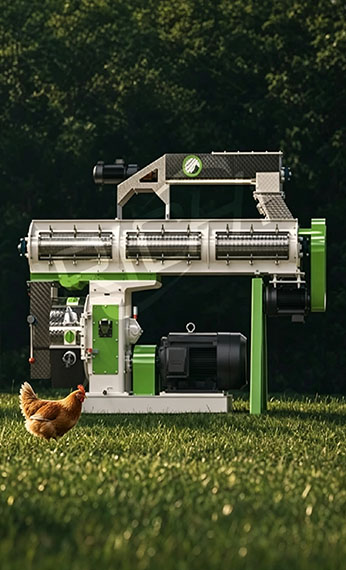
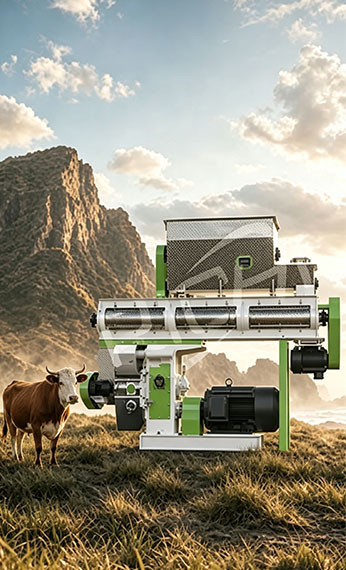
Cattle feed making machine
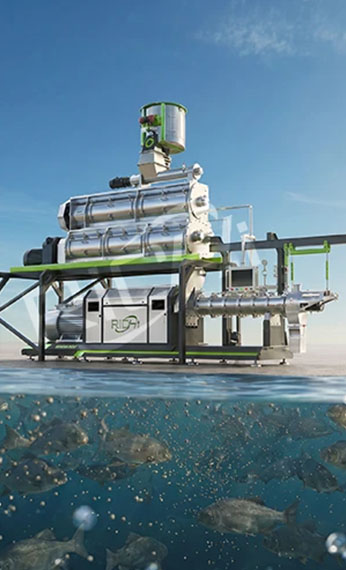
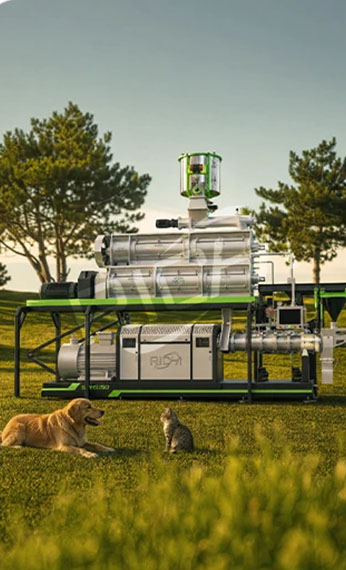
Máy ép đùn thức ăn cho vật nuôi

RICHI Machinery: Động lực cho ngành sản xuất viên nén toàn cầu
Với cam kết tiên phong trong lĩnh vực công nghệ viên nén và kỹ thuật công nghiệp, chúng tôi tận dụng hơn 30 năm kinh nghiệm nghiên cứu và phát triển cùng kinh nghiệm toàn cầu.
Chúng tôi tối ưu hóa quy trình thiết kế, sản xuất và tích hợp hệ thống nhằm thúc đẩy các ngành công nghiệp thức ăn chăn nuôi, sinh khối và các ngành công nghiệp chuyên biệt hướng tới hiệu quả, thông minh và bền vững.
Đội ngũ chuyên gia của chúng tôi cung cấp các giải pháp sản xuất viên nén trọn gói, đáp ứng các tiêu chuẩn quốc tế và phù hợp với các mục tiêu chiến lược của quý khách về năng suất và tăng trưởng dài hạn.
60.000+ m2
Diện tích nhà máy của chúng tôi
2000 +
Các dự án đang được triển khai trên toàn thế giới
140 +
Các quốc gia của khách hàng chúng tôi
200 +
Thông tin về đội ngũ của chúng tôi
Chuyên môn toàn cầu & Hệ thống xuất sắc
Các hệ thống sản xuất viên nén tiên tiến kết hợp giữa độ bền vững và khả năng thích ứng với tương lai, thiết lập các tiêu chuẩn ngành thông qua sự tích hợp công nghệ và đổi mới.
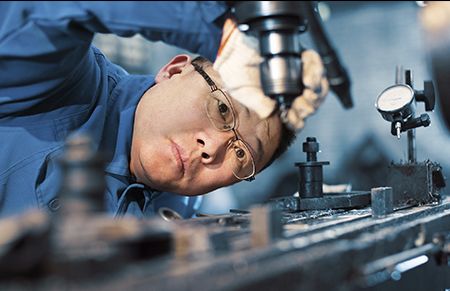
Chất lượng đáng tin cậy
Mỗi máy móc đều phải trải qua các cuộc kiểm tra chất lượng chính xác và nghiêm ngặt.
Bảo hành an tâm
Được hỗ trợ bởi mạng lưới dịch vụ toàn cầu với thời gian phản hồi nhanh chóng.
Hỗ trợ chuyên nghiệp
Các đội ngũ kỹ thuật giàu kinh nghiệm cung cấp dịch vụ hỗ trợ trọn gói.

Thanh toán an toàn
Mã hóa nhiều lớp đảm bảo các giao dịch an toàn và minh bạch.

Logistics toàn cầu
Dịch vụ vận chuyển quốc tế hiệu quả đảm bảo hàng hóa được giao đúng hẹn đến bất kỳ địa điểm nào.
Bắt đầu dự án sử dụng viên nén của bạn
Sản xuất viên nén là một quy trình có hệ thống. Hãy cung cấp thông tin về nguyên liệu thô và nhu cầu về công suất của quý khách, và chúng tôi sẽ thiết kế một giải pháp tùy chỉnh kèm theo sự tư vấn chuyên nghiệp để phục vụ cho sản xuất thương mại.

Địa chỉ: Phía nam ngã tư đường Xingda và đường Hongyuan, Wuzhi, thành phố Jiaozuo, tỉnh Hà Nam, Trung Quốc

Tel/WhatsApp: + 86 136 0866 8310

Email: enquiry@richimachinery.com



© Công ty TNHH Máy móc HENAN RICHI 1995-2026 Danh mục sản phẩm / Chính sách bảo mật
Liên hệ với chúng tôi
Vui lòng gửi yêu cầu của quý vị, các chuyên gia tư vấn của RICHI sẽ liên hệ lại với quý vị trong thời gian sớm nhất.

