
La principal responsabilidad del alimentador de materias primas es seguir las instrucciones del microordenador de la sala de microordenadores (control) para introducir el materias primas necesarias para la producción de piensos en el puerto designado del equipo de manera oportuna, precisa, con calidad y cantidad. El proceso de operación y las reglas básicas son las siguientes:
1. Llegar con antelación para prepararse. Debe llegar al lugar de producción 10 minutos antes de la hora de trabajo programada. 2. Asistir cuidadosamente a la reunión previa a la clase, comprender y aceptar con precisión la tarea de alimentación; llevar ropa de trabajo y equipo de protección laboral conforme a la normativa; comprobar todas las máquinas y equipos bajo la dirección del puesto; realizar todos los preparativos antes de la alimentación formal.
2. Confirme el número de almacén, la instrucción y el elevador. Antes de la alimentación, debe ponerse en contacto con la sala de ordenadores (control) para confirmar que el número de almacén de materia prima abierto es correcto, y obtener la instrucción de alimentación de la sala de ordenadores, y el material puede ser alimentado cuando el polipasto está funcionando normalmente.
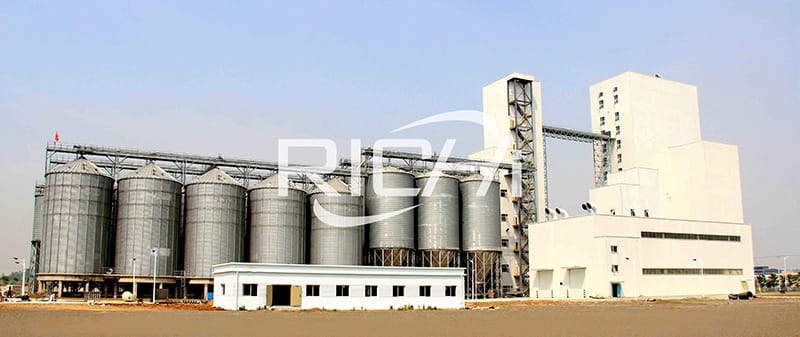
3. Apertura de la bolsa, inspección de calidad y alimentación. Excepto en el caso de los embalajes de papel, al desembalar, utilice unas tijeras o un cuchillo para desconectar el hilo de sutura de la esquina de la bolsa de embalaje, abra la bolsa y deposite el hilo de sutura desatado en un recipiente fijo. Está terminantemente prohibido cortar el embalaje a voluntad; hay que pasar cuidadosamente el sentido antes de alimentar Examinar la calidad de las materias primas que se van a invertir. Compruebe el color, olor, impurezas, humedad, aglomeración, moho, etc. de las materias primas. Si se encuentran problemas, deben informar inmediatamente al responsable y tratarlos estrictamente. Sacudir todas las materias primas en la bolsa de embalaje al alimentar, y colocar la bolsa vacía ordenadamente en el lado del puerto de alimentación para facilitar la clasificación y agrupación; limpiar los restos en el lugar de alimentación en cualquier momento. Queda terminantemente prohibido arrojar bolsas vacías, cuerdas y artículos varios.
4. Seleccione los residuos visibles. Al alimentar, todos los residuos y materiales aglomerados mohosos deben seleccionarse inmediatamente para evitar que los residuos y aglomerados mohosos entren en el equipo.
5. Preste atención al repostaje y a la limpieza del lugar. Antes de cambiar a otro tipo de materia prima, el sitio de alimentación debe ser limpiado, póngase en contacto con la sala de ordenadores (control), y obtener la instrucción de alimentación antes de empezar a poner otro tipo de materia prima.
6. Requisitos de eficiencia de alimentación. Para las materias primas con un peso por pieza de ≥70kg, la cantidad de alimentación debe ser ≥6,0 toneladas/hora persona; para las materias primas con un peso por pieza de 40kg≤<70kg, la cantidad de alimentación debe ser ≥4,5 toneladas/hora persona; para las materias primas con un peso por pieza <40kg, la cantidad de alimentación por hora debe ser como arriba La cuota se determina a discreción.
7. Limpiar regularmente los equipos relacionados. Cuidar el equipo (incluida la cortina y la valla de la compuerta de alimentación); limpiar periódicamente la bolsa y el tubo del colector de polvo para mantener un buen efecto de eliminación del polvo; encargarse de la limpieza del cilindro del imán permanente en el proceso de trituración; encargarse de eliminar periódicamente la cal en el tornillo y el alimentador de la trituradora, los devanados y otros accesorios; encargarse de la inspección y sustitución de las cribas y los martillos de la trituradora. La sustitución de los martillos debe procurar no ocupar tiempo de producción.
8. Supervisión del funcionamiento del equipo. Durante el funcionamiento, se debe prestar atención a la supervisión del estado de funcionamiento de la trituradora, apagarla inmediatamente cuando se oiga un sonido anormal y asegurarse de que la corriente de funcionamiento de la trituradora no supere el valor de la corriente nominal del motor. Prestar atención al funcionamiento de otros equipos, e informar al jefe de cualquier anomalía en cualquier momento, sin demora injustificada, y asegurarse de que los equipos gestionados y las diversas instalaciones auxiliares relacionadas estén en buenas condiciones durante el trabajo.
9. Rutina al salir del trabajo Antes de salir del trabajo, limpiar el lugar de alimentación y el área de responsabilidad para el saneamiento; transferir las bolsas de embalaje de materias primas y cuerdas a la ubicación designada; poner las herramientas y artículos utilizados en el lugar de restauración; hacer un buen trabajo en el lugar de alimentación y el área de responsabilidad; hacer Una inspección completa de rutina salir del trabajo antes de salir del trabajo. Completar los procedimientos de traspaso según sea necesario.
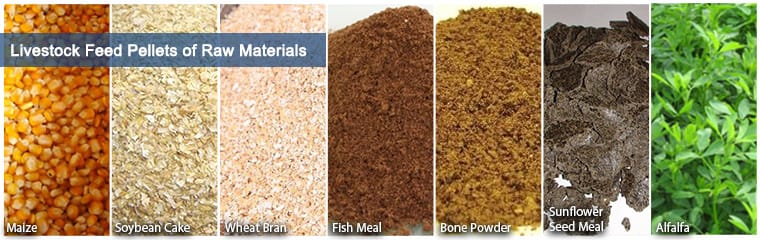
Varios materias primas para piensos
1. Materias primas para piensos de pollos
Como piensos energéticos, principalmente maíz, salvado de arroz, salvado, batata deshidratada, etc.; los piensos proteínicos incluyen principalmente torta de algodón, torta vegetal, torta de soja y otras tortas; los piensos gruesos incluyen principalmente harina de veza, harina de tallos vegetales, tallos de maíz, etc.; los piensos minerales incluyen principalmente harina de huesos, harina de cáscaras de huevo, harina de cáscaras, etc. En la formulación, los distintos tipos de materias primas mencionados deben seleccionarse de 2 a 3 tipos respectivamente, y combinarse en una proporción determinada para lograr el objetivo de complementarse mutuamente con nutrientes.
2. Materias primas para piensos
Maíz, trigo, cebada, arroz partido, harina de trigo, salvado, harina de pescado, harina de soja, harina de cacahuete, harina de algodón, harina de colza, harina de levadura, hidrogenofosfato de calcio, carbonato de calcio, sal, sulfato de cobre, sulfato ferroso, sulfato de manganeso, yoduro de potasio, óxido de zinc, selenito sódico, cloruro de cobalto, vitaminas liposolubles A, D, E, K, vitaminas del grupo B, lisina sintética, metionina, treonina, ácido cromático, medicamentos, agentes repelentes de insectos, agentes antifúngicos, antioxidantes, atrayentes aromatizantes, preparados enzimáticos, aglutinantes, etc.
3. Materias primas para piensos
Heno, paja, forraje verde, ensilado, maíz, sorgo, cebada, avena, arroz, salvado, raíces, tubérculos, frutas, verduras y escorias, harina de huesos, harina de cáscaras de huevo, harina de cáscaras, harina de huesos, carbonato cálcico, fosfato cálcico, fosfato cálcico dibásico, sal, sulfato de magnesio, vitaminas A, D, E, niacina, hierro, zinc, cobre, manganeso, yodo, cobalto, selenio, etc.
4. Materias primas para piensos ovinos
Las principales materias primas de los piensos energéticos para ovinos son: maíz, sorgo, cebada, etc. Las principales materias primas de los piensos proteínicos son: harina de soja, harina de algodón, torta de cacahuete, etc. Las principales materias primas de los piensos minerales son: harina de huesos, sal y bicarbonato sódico.
5. Materias primas para piensos para peces
Las necesidades proteínicas de los piensos para peces son relativamente altas, por lo que la proporción de materias primas proteínicas en las materias primas será mayor. Las principales materias primas proteínicas son: harina de pescado, harina de soja, ddgs y diversas semillas de cultivos oleaginosos prensadas. Además, las principales materias primas utilizadas habitualmente en los piensos son: maíz, salvado de trigo, harina secundaria, salvado de arroz, etc.

