
Récemment, un client nous a posé la question suivante : "Peut-on utiliser l'aliment pour pondeuses pour nourrir les canards pondeurs ? Il s'agit en effet d'un problème qu'il convient d'expliquer. Comme certains élevages de poulets veulent élever des canards, ils doivent tenir compte de l'alimentation, du coût, etc. Si les canes pondeuses peuvent manger les aliments pour poules pondeuses, il n'est pas nécessaire d'acheter des aliments composés ou de traiter les aliments eux-mêmes. Aujourd'hui, Richi Machinery va populariser cette question :
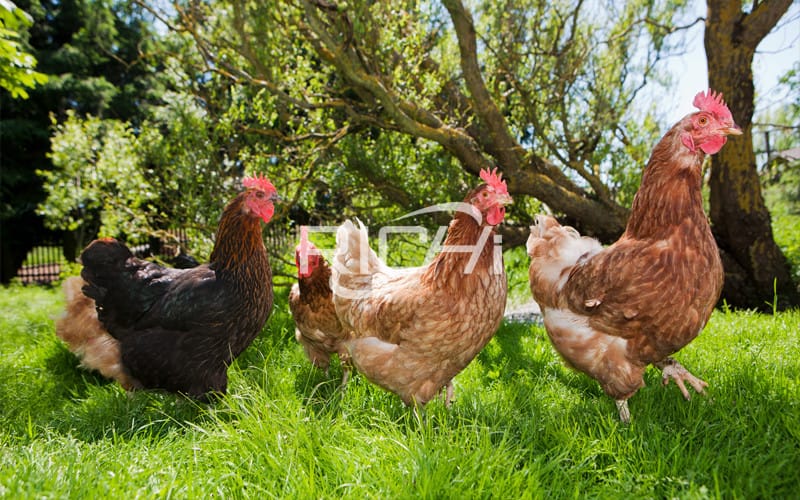
1. Matières premières pour les aliments pour poules pondeuses et canards pondeurs
Les proportions d'aliments consommés par les poules pondeuses et les canards pondeurs au cours de leurs périodes de croissance respectives sont différentes, mais les principales matières premières sont les suivantes :
(1) Aliments énergétiques Aliments en grains tels que le maïs, le blé et le son.
(2) tourteaux protéiques tels que le tourteau de soja, la farine de soja, la farine de coton et la farine de poisson.
(3) Les aliments minéraux contiennent des aliments calciques tels que la poudre de pierre et la poudre de coquille.
(4) Aliments vitaminés synthétisés industriellement.
(5) Aliments additifs tels que les stimulateurs de croissance antibactériens, les agents anticoccidiens, les antioxydants, les inhibiteurs de moisissure et les attractifs.
L'aliment pour poules pondeuses est plus riche en protéines que l'aliment pour poules pondeuses de la même période. Il n'est donc pas nécessaire d'ajouter quoi que ce soit à l'alimentation des poules pondeuses avec l'aliment pour poules pondeuses, qui est coûteux à nourrir.
En fait, certains clients se sont également interrogés sur le fait que les poulets aiment la sécheresse et les canards l'humidité, et que les habitudes de ces deux types de volailles sont différentes. Comment mélanger leurs aliments ? En fait, si les conditions le permettent, il est recommandé de les configurer séparément et de les nourrir de manière ciblée, ce qui est plus scientifique. Voici quelques recettes recommandées par Ruiqi pour tous :
【Formule alimentaire pour poules pondeuses】
(1) Formule d'alimentation pour les poussins
a. Maïs 62%, son de blé 3.2%, tourteau de soja zhi31%, hydrogénophosphate de calcium 1.3%, poudre de pierre 1.2%, sel 0.3%, additifs 1%.
b. Maïs 61,7%, son de blé 4,5%, tourteau de soja 24%, farine de poisson 2%, farine végétale 4%, hydrogénophosphate de calcium 1,3%, poudre de pierre 1,2%, sel 0,3% et additifs 1%.
c. Maïs 62,7%, son de blé 4%, farine de soja 25%, farine de poisson 1,5%, farine végétale 3%, hydrogénophosphate de calcium 1,3%, poudre de pierre 1,2%, sel 0,3%, additifs 1%.
(2) Formule d'alimentation pour poules pondeuses
a. Maïs 61,4%, son de blé 14%, farine de soja 21%, hydrogénophosphate de calcium 1,2%, poudre de pierre 1,1%, sel 0,3%, additifs 1%.
b. Maïs 60,4%, son de blé 14%, farine de soja 17%, farine de poisson 1%, farine végétale 4%, hydrogénophosphate de calcium 1,2%, poudre de pierre 1,1%, sel 0,3%, additifs 1%.
c. Maïs 61,9%, son de blé 12%, farine de soja 15,5%, farine de poisson 1%, farine de légumes 4%, farine de coton 2%, hydrogénophosphate de calcium 1,2%, poudre de pierre 1,1%, sel 0,3%, additifs 1%.
(3) Formule d'alimentation pour poules pondeuses
a. Maïs 58,4%, son de blé 3%, farine de soja 28%, hydrogénophosphate de calcium 1,3%, poudre de pierre 8%, sel 0,3%, additifs 1%.
b. Maïs 57,9%, son de blé 4%, farine de soja 21,5%, farine de poisson 2%, farine végétale 4%, hydrogénophosphate de calcium 1,3%, poudre de pierre 8%, sel 0,3%, additifs 1%.
c. Maïs 57,4%, son de blé 3%, farine de soja 20%, farine de poisson 2%, farine végétale 4%, farine de coton 3%, phosphate dicalcique 1,3%, poudre de pierre 8%, sel 0,3%, additifs 1%.
Note : Les additifs ci-dessus contiennent des acides aminés, des vitamines, des oligo-éléments et des facteurs de croissance.
【Principes pour la pose d'aliments pour canards】
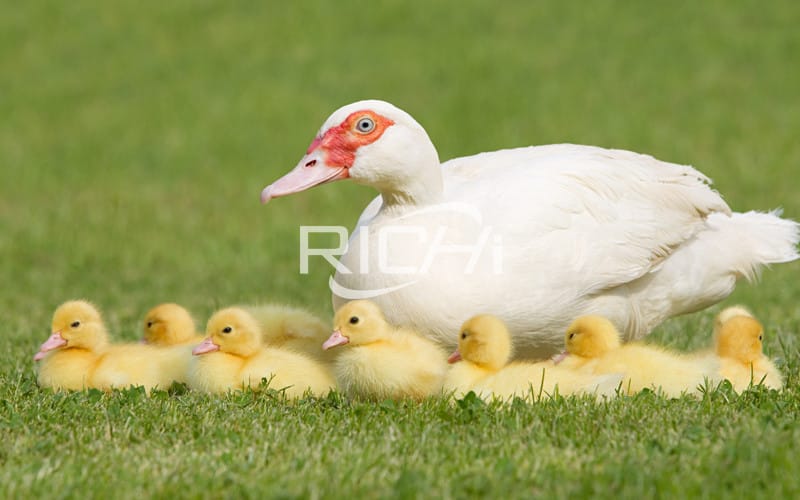
(1) Ingrédients des aliments pour animaux. La formule doit être facile à utiliser lors de la sélection des matières premières. La qualité des matières premières pour aliments des animaux doit être stable, la quantité suffisante, le prix approprié et les ressources locales avantageuses. Les aliments pour animaux doivent être conservés à l'état frais. Afin d'éviter l'altération des moisissures, l'aliment doit être stocké dans un endroit sec et ne doit pas être stocké dans le bâtiment des canards.
(2) Nutrition adaptée. La formulation du régime alimentaire des canes pondeuses doit déterminer la concentration appropriée en nutriments de l'aliment composé en fonction de l'âge des canes et de l'ingestion d'aliments. La formule de référence est la suivante
a. Canetons à l'œuf (1-8 semaines) : maïs 58,71 TTP4T, farine de soja 261 TTP4T, farine de colza ou de coton 71 TTP4T, poudre de pierre 41 TTP4T (la farine d'os et la farine de coquille sont acceptables), prémélange 41 TTP4T, sel de table 0,31 TTP4T. Au cours de la première semaine, il est conseillé aux canetons de manger tous les aliments en granulés au prix fort.
b. Canard dans l'œuf (8 semaines avant le début de la production) : maïs 64%, farine de soja 16%, farine de colza ou de coton 6%, poudre de pierre 9,7% (la farine d'os et la farine de coquille sont acceptables), pré-mélange 4%, sel 0,3%, quantité appropriée de Kinsey.
c. Période de ponte des canards : Maïs 51%, farine de soja 22%, farine de colza ou de coton 3%, poudre secondaire 10%, poudre de pierre 9,7% (la farine d'os et la farine de coquille sont acceptables), prémélange 4%, sel 0,3%.
(3) Utiliser des additifs. Les principaux composants des additifs sont les acides aminés, les vitamines et les minéraux. Les données ont confirmé que l'ajout de 80 grammes de méthionine et de 50 grammes de lysine au régime conventionnel de 50 kg des canes pondeuses réduisait la farine de poisson d'environ 4 kg à environ 2 kg, et que la production et le poids des œufs n'étaient pas affectés. Les additifs vitaminiques peuvent remplacer complètement la fonction nutritionnelle du fourrage vert. Ils permettent non seulement de compléter les vitamines, mais aussi d'économiser beaucoup de fourrage vert, de réduire l'intensité du travail des éleveurs de canards et de réduire le coût de production de l'élevage de canards.
Aujourd'hui, j'ai présenté le contenu pertinent de la formule de l'aliment pour poules pondeuses et des ingrédients de l'aliment pour canards pondeurs, vous pouvez l'essayer en fonction de la formule de l'aliment ci-dessus. Si vous souhaitez toujours obtenir des informations sur les aliments pour poules pondeuses et les ingrédients des aliments pour canards pondeurs, vous pouvez les essayer."Formule d'alimentation pour poules pondeuses", "Coût de l'alimentation des poules pondeuses et des canards", "Coût de l'alimentation des poules pondeuses et des canards"."Comment traiter les aliments en granulés pour poules pondeuses", "Comment traiter l'alimentation des canards pondeurs" ", "Comment traiter l'alimentation des canards pondeurs"."Machine à granulés pour aliments pour poulets", "broyeur à marteaux pour aliments pour canards", veuillez continuer à suivre le site officiel de Richi Machinery :https://www.richimachinery.com/
enquiry@richi-machine.com
Whatsapp/Cel : +86 185 7410 3366

